I've been reading Ultimate Sacrifice, a book that links the assassination of John F. Kennedy, the Central Intelligence Agency, and organized crime (aka the Mafia). I'm not very far into it so can't comment much on the book itself, although it does seem like the authors spend a lot of time hashing over minutiae and don't seem to have much of a clue in terms of following a coherent narrative line. One thing is super clear, though, and that's how useless the CIA was back then.
It's unreal. The CIA apparently had a gazillion people working for them -- their "station" in Miami apparently employed 3,000 people. You read that right. Three thousand! They're in the heart of the Cuban exile community. And guess what? They can't obtain any reliable intelligence from Cuba. They keep trying to plant spies, deep cover agents, inside Cuba and failing. Their would-be spies end up arrested or dead. But does that deter them from plowing ahead with plans to assassinate Castro? Nope. Apparently the CIA higher-ups had the same attitude as the cockroach general in the Fabulous Furry Freak Brothers comics: doesn't matter how many foot soldiers get squashed, there'll always be replacements.
And why is the Castro government so good at catching CIA spies? Because the CIA had already managed to build a nasty reputation for meddling and murder in Latin America, thanks to activities like engineering the overthrow of the democratically elected Guatemalan government a few years earlier. The CIA trained assassins to target Guatemalan officials and activists. Castro knew what the U.S. government in the form of the CIA was capable of and prepared accordingly.
Guatemala was, of course, a pattern the CIA followed for years, usually with disastrous results for way too many people. Name a decade and you can find a CIA operation that turned out to be a Colossal Blunder. In the 1970s they helped engineer the overthrow of the democratically elected government of Chile, which led to years of oppression of the Chilean people by a murderous dictatorship. In the 1980s they supported Bin Ladn and helped create the Taliban in Afghanistan.
What's even more bizarre is that a good deal of the time they were actually working at cross-purposes with the rest of the government. The State Department would be pursuing one option through diplomacy while the CIA was busily doing the exact opposite with its covert operations. They would deliberately undermine the diplomats.
And then when you add in the fact that most of the time the "intelligence" they were supposedly gathering turned out to be wrong. . . Why does that agency still exist?
Wednesday, August 10, 2016


Tuesday, August 9, 2016
Pictured Rocks National Lakeshore
 |
| Miner's Castle |
PIRO is located on the south shore of Lake Superior between Munising and Grand Marais, Michigan. It's a typical water park -- long but narrow. The enabling legislation for the lakeshore and river parks usually limited just how far away from the water a park could go. End result can be a park that's many, many miles long but only a quarter of a mile wide.The National Park Service as an agency is 100 years old this year; PIRO is exactly half that age -- it was created in 1966. The park includes some spectacular shoreline (sandstone cliffs, sea caves carved by wave action, giant sand dunes) as well as lovely beaches and numerous waterfalls. The area is a favorite with sea kayakers, and tour boat operators do a pretty good business in the summer. One tour operator has glass bottom boats and cruises over a number of shipwrecks, which I'm told are quite interesting.
 |
| Pileated woodpecker. |
We did not do any boat tours; we stuck to the land and visited places relatively easy to get to, like Munising Falls, the Log Slide, and Miner's Castle (shown above). Although it's not obvious in the photo, there is a paved path leading to Miner's Castle where there's an overlook hiding behind those trees to the right of the rock formation. Miner's Castle used to have a third "turret," but it came tumbling down during a bad storm a number of years ago. Miner's Castle is one of those typical NPS sites: lots of signs up warning people to stay behind the fence and lots of footprints in the dirt providing ample evidence people cannot read. I'm not sure if anyone's managed to kill themselves by clambering around on those rocks for the fun of it, but I do know a guy was convicted of murder a few years ago for shoving his wife off a cliff at PIRO.
 |
| The Pickle Barrel house. |
 |
| Sable Falls |
I repeat. A food truck. In Grand Marais. Apparently hipster Meals on Wheels are now everywhere. It was not a bad burger. A tad overpriced, but when you've got a food truck in the middle of nowhere your profit margin has to be extremely thin. I was willing to pay a little extra just to support the novelty factor -- although using that logic I should have gone running out to buy a frozen treat when the ice cream cart bicycled through the campground on Saturday. For a brief moment, it was like being back in Atlanta, except there the Mexican entrepreneurs had push carts. I used to wonder just how many miles those guys walked every day. . . but I digress.

 |
| Munising Falls |
 |
| Nifty resource education |
 |
| Logging high wheels and a logging sled |

 | |
| Note the graphic that accompanies all the cautions. People ignore it, of course. Accidents are what happen to other people. |
 |
| Au Sable Light Station as seen from the Log Slide overlook |
 |
| Pictured Rocks National Lakeshore headquarters building. |
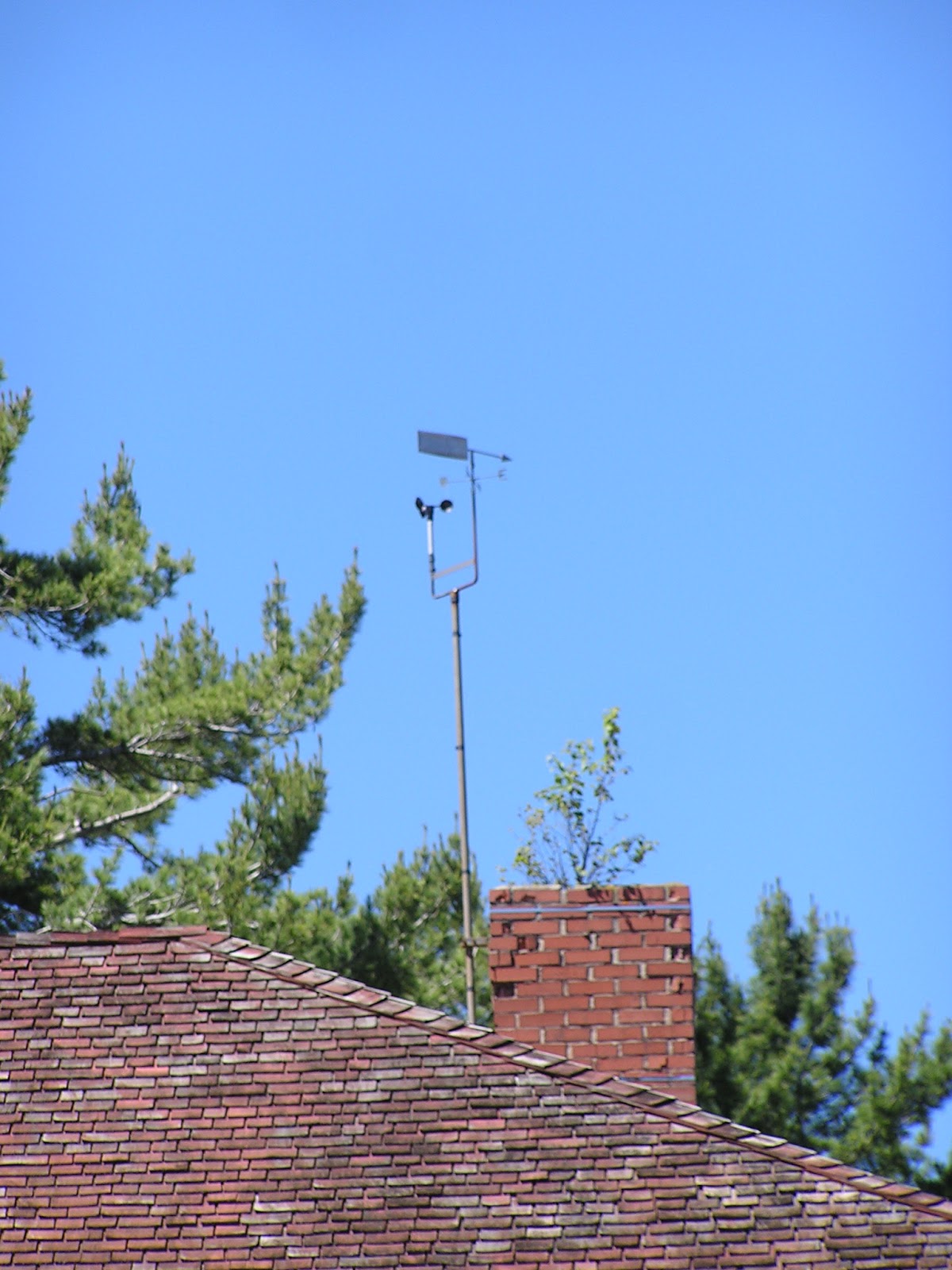
We hit a few overlooks along the way, concluded that Lake Superior is indeed a large lake and on that particular day a really amazing color, and eventually wound up at Miner's Castle and then in Munising. Our last stop was at Sand Point, which is another former Coast Guard lifesaving station now being used by the National Park Service. It's the Park headquarters. If I was still doing the List of Classified Structures, I'd ding it for maintenance issues. The paint is starting to flake and, you know, I could be wrong but I don't think trees are supposed to grow out of chimneys.
 |
| Yes, the tree is growing out of the chimney. |
 |
| I think I may have figured out what to do with the ruin of a boat the museum owns. Fence it off and let it rot. |
Monday, August 8, 2016
Freight cart update
I mentioned a few weeks ago that the museum's Railway Express freight cart was in the process of being rehabbed. This is what it looks like now.
 Dave, the guy who worked on it, did an amazing job. I wasn't sure it was actually salvageable when he began because there was so much dry rot. All the boards for the bed of the cart had to be replaced, the wheels were in horrible shape, and in general it was teetering on the cusp of not being worth saving. But Dave pulled it back from the brink.
When the museum closes for the season, we'll move it to a slightly less exposed position under the pavilion roof and put it on jack stands for the winter. I've been wondering it it would be possible to have it shrink-wrapped like a boat. Tarping it won't work. We tried tarping the fire hose cart and failed. The wind ripped the tarp off in record time. I'll have to see if there's anyone in the Baraga area who does shrink-wrapping and just how much it would cost. Given how many hours Dave put into that cart, it would be nice to keep it looking good for more than one season.
The fact the freight cart is looking so good once again has me wondering why the historical society put the storage building on the slab backwards. Back in the '90s, about the same time the museum was being built, the historical society had a large concrete slab laid. They needed a place for the high wheels and a few other items -- the plan was that eventually they would build a pavilion to shelter things. The logging high wheels and a few other things sat on the slab for years; no pavilion. Then in about 1999 or 2000, the society was given a one car garage. It was moved to the site and placed on the pavilion. But, as I've noted before, the garage door is on the wrong end. It faces the lake. If it faced the highway, it would really easy to move the small carts indoors for the winter. But nope, it faces the wrong way.
 The facing the wrong way might not be quite as much of an annoyance if there wasn't that tractor sitting on the slab next to the storage building. We could roll things down it and around the corner. As it is, having an ancient McCormick Deering with steel wheels parked there makes things a bit awkward. Although maybe now that the pavilion is done, we should consider moving the tractor so it's under the pavilion, too, instead of parked awkwardly out of sight of museum visitors. I doubt that having that tractor sitting where runoff from the storage building roof drips right on to the engine is doing it much good.
I am occasionally tempted to speculate as to why the garage got put on the slab facing in the wrong direction, but given how many odd things I've stumbled across since I began volunteering a garage door in the wrong location is a minor issue. We are able to roll the hose cart around on the grass and get it into the building for the winter, but can't do it with the freight cart because it's more fragile and has one wheel that won't turn. One of these days I'll have to see if we can scare up enough grant money to put a garage door in on the other end -- it would make life a little simpler.

When the museum closes for the season, we'll move it to a slightly less exposed position under the pavilion roof and put it on jack stands for the winter. I've been wondering it it would be possible to have it shrink-wrapped like a boat. Tarping it won't work. We tried tarping the fire hose cart and failed. The wind ripped the tarp off in record time. I'll have to see if there's anyone in the Baraga area who does shrink-wrapping and just how much it would cost. Given how many hours Dave put into that cart, it would be nice to keep it looking good for more than one season.
The fact the freight cart is looking so good once again has me wondering why the historical society put the storage building on the slab backwards. Back in the '90s, about the same time the museum was being built, the historical society had a large concrete slab laid. They needed a place for the high wheels and a few other items -- the plan was that eventually they would build a pavilion to shelter things. The logging high wheels and a few other things sat on the slab for years; no pavilion. Then in about 1999 or 2000, the society was given a one car garage. It was moved to the site and placed on the pavilion. But, as I've noted before, the garage door is on the wrong end. It faces the lake. If it faced the highway, it would really easy to move the small carts indoors for the winter. But nope, it faces the wrong way.

I am occasionally tempted to speculate as to why the garage got put on the slab facing in the wrong direction, but given how many odd things I've stumbled across since I began volunteering a garage door in the wrong location is a minor issue. We are able to roll the hose cart around on the grass and get it into the building for the winter, but can't do it with the freight cart because it's more fragile and has one wheel that won't turn. One of these days I'll have to see if we can scare up enough grant money to put a garage door in on the other end -- it would make life a little simpler.
Sunday, August 7, 2016
Things that make a person wonder
The Michigan primary election that does stuff like thin out the herd of candidates for Congress was this past Tuesday, the 2nd. The person who's currently the Congress critter from Michigan's First District decided not to run again so there was actually a fair amount of competition. It can be depressing some years to see how an incumbent's decision to run again can stifle the competitive instincts in way too many politicians. Even the opposing parties will look at the incumbent's decision to keep wasting space in Washington and decide not to run anyone against him or her.
In any case, this year there was some competition. Three Republicans and two Democrats were vying for slots on the ballot in November. One of the three Republicans is the useless sack of fecal matter that currently represents this area in the State Senate; turned out I'm not the only person who considers him useless because he finished third. I was hoping this meant we wouldn't be stuck with him much longer, but no such luck -- he's only midway through his state senate term and didn't have to resign that seat in order to run for something else this year. No doubt he'll try for Congress again in 2018 because that's when he'll be term limited out for state office here in Michigan.
Oh well. Can't win 'em all.
But here's what makes me wonder. On Monday, the day before the election, a postcard dropped into our mailbox inviting us to attend a meet and greet with Lon Johnson, one of the Democrats running for Congress. The card said, and I quote, "You're invited to a town hall meeting, meet Lon Johnson - Candidate for Congress." We got the card on August 1, which means it was mailed the previous week. The town hall meeting is scheduled for August 17. The poll numbers must have been looking damn good for Johnson if his campaign staff felt comfortable sending out meet and greet cards almost a full week before he was officially the candidate.
As it turned out, he did win by a large margin -- over 60% of the vote. Not much of a surprise, actually, when he'd had a very active campaign beginning in the spring while his opponent was so low profile we didn't realize he was running until just a couple days before the election. Still, mailing those cards early has to make a person wonder just how much of the election results was determined by whatever is left of the Democratic party machine in Michigan and how much was determined by the voters.
Tuesday, August 2, 2016
Winter is coming
I am realizing this month just how much planning can go into being a snowbird. The S.O. and I are planning to do some ambling with the Guppy this coming winter. We figure we'd better do it now because we're not going to get any younger. We bought the Guppy so we could travel so that's what we're going to do while we're still hale and hearty enough to hit the road without terrifying other drivers and to survive doing the various tasks involved in setting up and tearing down each time we camp.
Anyway, part of the planning for the travel does entail stuff like thinking about where we're going and maybe making reservations. For at least part of the winter, we intend to just sit in one spot -- Safford, Arizona -- so that meant looking for an RV park that does extended stays. Naturally, the nicer one is already booked full. We're now on a waiting list for it. In the meantime, as a fallback, I'm trying to get us into the other one, the one that's still so new the landscaping consists of concrete slabs and vegetation that's maybe knee-high. The Younger Daughter checked both places out and recommended the one that's been around for a while. She also said the manager warned her they fill fast. Unfortunately, the older park isn't very big, has a significant number of regulars, and the tiny number of vacancies it had two weeks ago are gone now. Hence, we're on a list. But if we don't get into that one, I'm sure we'll find something, although it might not be quite as close to where Tammi lives.
But that isn't the only sort of planning one ends up doing when thinking about snowbirding. Right now it's canning season. It's the time of year when I'd normally be assembling the various supplies, checking to make sure there were enough lids on hand, replenishing the vinegar and sugar stashes, and flipping through various recipes. Except there's a problem with planning on canning: if we're going to be snowbirds, we're going to winterize the house. You know, disconnect the water, drain the system, and turn off the heat. That means we can't leave anything here that would be damaged by freezing. Like canned goods. They freeze, they expand, seals get broken, stuff rots. Or will rot once it gets to be spring and things thaw out. So how much canning do I want to do if it means I have to take everything and divide it up between the Older Daughter, the Grandson, and the storage space under the bench seat in the Guppy? I already know I'm going to be pressure canning a lot of green beans -- that's one thing that's doing really well in the garden this summer -- so just how many jars of pickles and relishes and jam do I want to deal with, too? Not to mention blueberry jam, canned apple pie filling, and a few other things. Just how well-traveled do I want my apple marmalade to be?
And, speaking of stuff freezing, what do I do with the houseplants? I don't have many, but I have a hunch that they're going to feel like there's a lot more if they all get transferred to the Guppy in a few months. Guess that's something I'll have to figure out before summer's over. I know there are people who travel with plants -- I've seen them in campgrounds -- but I'm not sure I want to be one of them.
Sunday, July 31, 2016
Okay. Who's been stuffing the ballot box?

Knowing that people aren't inclined to toss coins into a totally empty bottle, I salted all four. Each milk jug had $1.50 in assorted coins in it when we opened for the season. I noticed that the level seemed to be climbing fastest in Trump's bottle (something I consider an ominous sign, but that's not the subject of this post). I decided to check to see just what was happening.
As I feared, Trump's bottle had the most coins in it. Both Johnson and Stein had received a few votes, too. But Clinton? This is where shenanigans come in. Not only has no one voted for her, someone's been stealing the "ballots" that were there. She started off with $1.50. As of this afternoon, there's only $1. Not only is she not gaining any votes, she's going backwards.
Saturday, July 30, 2016
What is it with Fox News and anger?

I know the feeling. Back in Atlanta when I was working but the S.O. was a man of leisure, he developed this bizarre addiction to CNN. I don't think he had it on all day, but it did seem like he watched way more Wolf Blitzer than any normal human should. In retrospect, I guess it could have been worse. He could have drifted into watching Fox News. Not likely, because we've been calling it Faux News for years, but you never know. A number of my pals are themselves pretty moderate in their political views, basically right in the middle or even slightly to the left in their leanings, as were their spouses, but somehow the men in their lives got seduced by Fox. Maybe it's the lure of all those young, female, blonde news readers. . .
Anyway, it's become apparent that sooner or later if you're a die hard Fox News viewer you slide into being permanently angry. You're pissed off all the time about everything. In the past few years I've gotten a number of letters in which pals describe just how hard it is to live with someone they thought they knew but who has now become a contender in the World's Angriest Man contest. And, as one pal described her significant other's descent into the abyss, it's like the more they watch, the more they have to watch. Her husband used to have hobbies. He golfed. He fished. He puttered around in a workshop. Now he sits, watches Fox News, and rants.
I can understand the news media lying, either through omission (the stories that never get covered) or on purpose. The news media in this country has been doing both for as long as the United States has existed. The idea that the news media are supposed to objective is a fairly recent fantasy. What I don't understand is slanting the news in a way that seems designed to trigger rage on the scale that Fox News does.
Maybe it's just coincidence. Maybe the angry Fox viewer already leaned towards xenophobia, misogyny, and irrational anger and it just took time for that side of their personality to come out. Maybe the spouses were jerks all along, but my pals never noticed during the decades they were both busy with work. Retirement arrives, they're together 24/7, and suddenly it's holy wah, I'm married to a Bill O'Reilly fan!
I don't know. It's another of life's little mysteries. I do know that every time I read one of those letters from a pal wondering what's wrong with her spouse -- is Fox viewing a warning sign for the onset of senile dementia? Does she need to start looking into nursing homes that specialize in memory care? -- I'm relieved my biggest complaint about the S.O. is he's not a morning person.
Sunday, July 24, 2016
Gardening
 |
| Potato plant |
It would be nice -- last year the chipmunks wiped out most of the plants just as they started to sprout, and the year before that I think it was drought. Or maybe poor soil. We have one area in the garden where it seems like no matter what we do to it -- compost worked in, commercial fertilizer, treatments to correct the pH, you name it -- nothing wants to grow particularly well. I'm thinking seriously about marking that space off, planting clover there, and letting it stay fallow for a couple years.

I also finally got my baby rhubarb plants set out. Last summer I saved a lot of rhubarb seeds just for the heck of it. You know, almost no one grows rhubarb from seed. The usual method is to divide up an existing clump. That's how all of our rhubarb wound up where it is. We either transplanted existing rhubarb or bought live plants. But when one of the rhubarb plants bloomed last year, I decided to let it go all the way. Usually we cut the flower stalks off, the theory being that you always want the plant to put its energy into its roots and not into seeding, but last year I ignored the nascent stalks, let them flower and seeds form, and then bagged a bunch of the seeds.
Back in May, I planted about a dozen seeds in peat pots with two seeds to a pot. Of all the stuff I started from seed, the rhubarb took the longest to sprout and had the lowest germination rate: only two pots had any seedlings appear. In contrast, when I started zucchini, the rate was 6 out of 6. This helps explain why although the rhubarb plants will have a gazillion seeds, all of which look like they'd travel on the wind pretty good, a person doesn't look around and see our yard being taken over by rhubarb the way oregano and chives have overrun everything (every time we mow the lawn by the Woman Cave I find myself craving Italian food).
 |
| Oregano in bloom. Bees love it. |
In any case, there was an empty space in our row of rhubarb so yesterday I planted the two little tiny baby rhubarb plants in that area. Rain was predicted so I figured it would be good to get them in the ground before it rained, not after. I put a marker by each so we won't accidentally smother them when we mulch around the other plants. Now all I have to do is hope they survive. Because we have both kinds of rhubarb in the garden -- red and green -- and both kinds flowered, I'm a little curious to see what the plants end up being. With cross pollination, either is possible.
 |
| Rhubarb seeds |
Saturday, July 23, 2016
Some helpful tips if you're planning on donating something -- anything! -- to a museum

But that's what happened today. A lady walked in, asked the volunteers working this afternoon about the items in question, and they called me. I am, after all, the person who plays with the database. In theory, I know where stuff is. But something that got dropped off at least a year before I began volunteering? And that apparently had no documentation?
Definitely a head*desk (or perhaps a head*wall) moment.
It turned out I did recall the box in question. It was sitting in the office when I first began volunteering in June 2012. It had a note on it saying that the historical society's military history expert had gone through it to see if there was anything war-related that the museum could use. The container was waiting for Karen, the museum's volunteer curator for everything else, to look it over. And then what? I don't know. Based on the lack of other instructions, the assumption would be to pitch (or give to St. Vincent de Paul) anything that didn't fit in with the museum's mission. Karen never did get to the box; eventually it became my duty to dig through it.
It turned out to be an interesting mix of stuff, some of which was total trash (old store receipts, for example) and some that was really neat. I sorted, cataloged, and filed. Some artifacts wound up incorporated into exhibits, some went into storage. Documents got sorted into several different categories -- a family history file, World War I, World War II, Boy Scouts, and some others -- and it all got recorded as having been donated by a specific family.
In any case, by the time I was done going through the box, everything that was in it was either something that the museum needed, however need may be defined, or so obviously worthless it went into the trash. There were a few things that had teetered on the line between keep or discard, but when in doubt I opted for keep. Of course, one reason for that clear dichotomy -- catalog or jettison -- was there was no indication I should do otherwise. The container came into the museum in 2011; I didn't start to get into it until at least two years later, possibly 3. There was nothing to indicate it was any different from the other boxes of miscellaneous weirdness we get, the stuff that's left over after the estate sale, the odds and ends a family can't manage to toss in a dumpster themselves so they drop it at the museum instead.
Personally, I find it hard to believe that anyone associated with the museum would have accepted a box full of stuff with the understanding that we were going to look through it, take out a few things, and then hand the rest back given how many boxes of unsorted stuff were already taking up space in the building. I am reasonably sure that if Karen had still been capable of scampering up the ladder to the attic that's where the box would have gone to gather dust indefinitely. I have a hunch that what happened is the lady came in, talked with our now-deceased past president, and the two of them managed to talk past each other. He thought she was giving the museum a no strings attached box of stuff; she thought he understood that at some point she'd be back to pick up whatever the museum didn't want. But we'll never know for sure -- Jim's been dead for over 3 years now.
Bottom line, people, is that you all need to do your sorting first, taking out anything that has any sentimental value for you, and then drop the leftovers at the local historical society. When you do drop it off, make sure you get a receipt, a document that spells out what rights (if any) you retain and what you're giving up. You can't count on people's memories. People die, they stop volunteering, they deal with enough people and donations that everything just blurs together. It was sheer luck that when the volunteer on duty at the museum called me I could actually recall a few details about the box in question. We now have approximately 4,000 artifacts in the database; if I'm pushed, I can remember specifics about maybe a few hundred of them. Or maybe a few dozen. Or maybe six or seven. And those are the ones I did most recently. If it went into the database a year or two ago, odds are that I've forgotten the thing exists. The whole point of the database is that we won't have to rely on people's memories; we can look stuff up.
Finally, if you're considering donating with strings attached, don't do it. Don't assume you can treat the local historical society museum like a storage unit, dropping off your family's tchotchkes for awhile and then coming back a few years later to pick them up because you've had an attack of nostalgia or a delayed inclination to hoard. If you're not willing to abide by the line on the donation form that says once the museum receives an item we can do whatever we want with it -- add it to the collections, put it in an exhibit, give it to another museum, sell it, or throw it away -- then don't donate at all.
Friday, July 22, 2016
Book Review: The Gift of Fear

The bottom line in this book is trust your gut. If your instincts tell you something isn't right, listen. We humans spend our entire lives being socially conditioned to deny and ignore basic survival instincts. We'll deny the obvious -- the warning signs that a new boyfriend is a controlling abuser, that a problem employee has the potential for violence, that the nice young man who's offered to help carry your groceries is planning to mug you in the parking lot. Women especially are trained from childhood to be "nice," to never make a fuss, not to be aggressive. We're so afraid of looking like a bitch that we set ourselves up to be abused. We'll try to explain away or make excuses for people showing every clear sign that they're borderline crazy or worse.
De Becker does notes that although women have been trained by society to ignore warning signs, men can be just as bad when it comes to denial in settings like the workplace. Employees will signal loud and clear that they're a serious risk to have around, but managers will ignore warning sign after warning sign until it's too late. De Becker gives multiple examples of incidents that were easily preventable if employers had just taken the time to actually do background checks, to ask serious questions at job interviews, or to take complaints from other employees seriously. When he asked employers why they didn't check references, the excuse was that they knew that no one would provide a reference who was going to give a bad answer. Well, it might still be a good idea to verify that the references actually exist or that the applicant did work at the places given as past employers. At the very least, discovering that an applicant claimed to have worked for a company that doesn't exist would be a clue that applicant might not be the most honest person on the planet.
A slight digression: I am always astounded when I read about cases where people have managed to lie their way into some fairly high profile jobs by giving themselves degrees from colleges they never attended or listing past employers who don't exist. Yes, it's true that most employers fear litigation enough that they won't say anything negative about a former employee, but they will at least tell you whether or not someone actually worked for them. And you know what? If you call a former employer and the reaction on the phone involves an audible gasp and a muttered "Oh, shit. . ." before they go into the spiel about not being able to say anything other than to confirm employment you've gotten the answer you needed.
Anyway, De Becker also mentions that communications within a company can lead to problems going unresolved and eventually exploding. If top management doesn't know a problem exists, they can't address it. He gives an example using sexual harassment in the workplace: when he talked with a CEO of a national restaurant chain, the executive said they had maybe one or two complaints nationally per year. When he went down a level, the number of known complaints went up to a dozen or more. At even lower level, it went from "one or two" to "20 or more a month." Which, of course, meant that nation-wide there were hundreds of complaints annually that top management either didn't know about or were pretending didn't exist. Why didn't the guy at the top know what was actually going on? Because no one wanted to be the person reporting bad news. Which isn't much of a shock, actually, considering that CBS Television built a reality series, Undercover Boss, around the premise that the CEO of a corporation has no clue as to what's happening down in trenches.
As I was reading this book, I found myself remembering an episode on Michael Moore's short-lived television series, TV Nation. One of the classic themes when a serial killer is apprehended or some horrific episode of domestic violence occurs is "He seemed like such a nice guy. We never noticed anything unusual." Moore decided to test that. If I recall correctly, he rented a house in a nice suburban neighborhood and then had the male occupant behave in a blatantly suspicious manner, right down to digging large, coffin-sized holes in the backyard and burying human-sized bundles and 55-gallon barrels. After a few weeks, the "police" staged a dramatic raid and marched the occupant out in handcuffs and drove him away. Moore then interviewed the neighbors, who quite predictably
claimed the occupant "seemed like a nice guy" and "never did anything unusual." The occupant had done everything short of putting a billboard in the front yard proclaiming "I'm a serial killer!!" but the neighbors willfully ignored it all.
Part of that willful ignorance no doubt came from the classic American reluctance to get involved, but another motivation had to be denial: denial that there could be a real problem right down the street from where a person lived. Humans are really good at believing that if they just ignore something long enough, it will eventually go away. After all, serial killer Jeffrey Dahmer's landlord bought the explanation that the foul stench coming from Dahmer's apartment was caused by a few dead tropical fish in the trash. Having experienced the Woman Cave becoming unbearable from the stench of one dead mouse, I don't want to think about what a building would smell like with a couple of decaying human cadavers in it. You've got to work hard at denying reality to be able to rationalize away that sort of stench.
De Becker also debunks the notion that violent behavior is not predictable. He lays it out pretty clearly that in domestic violence cases there's always a pattern of escalation. More importantly, he describes the warning signs, the indicators, that signal early on in a relationship that a person is on track to be an abuser.
So what's the bottom line on the book? It's worth reading, especially for its message that there's a difference to living in fear and listening to fear. As Americans we tend to do the first -- too many people live in a constant state of terror, scared silly of abstract stuff that's never going to happen, while ignoring our intuition about threats that are right in front of us. We tie ourselves in emotional knots about threats from terrorists while ignoring the nagging sense that there's something about a potential babysitter or boyfriend that doesn't seem quite right. Then we're shocked when the babysitter turns out to be a thief or the boyfriend becomes violent.
Because the edition I read came out in 1998, when social media as we know it now did not exist and cell phones were still relatively rare, I wondered if there was an updated edition. Apparently not. However, that's a minor quibble. It would be interesting to see De Becker's thoughts on dealing with social media, most of which strike me as being a stalker's dream come true, but the fact it's not discussed in the book doesn't make the book overall less important.
Subscribe to:
Posts (Atom)