Showing posts with label camping. Show all posts

Wednesday, November 23, 2016

Coronado National Forest: Cochise Stronghold

Cochise Stronghold is a section of a canyon in the Dragoon Mountains that is famous for being the spot where the famous Chiricahua Apache warrior Cochise is buried. Cochise fought both the Mexicans and the U.S. military, but agreed to a peace agreement after becoming friends with the local Indian agent. During hostilities, the Dragoon Mountains had served as a base for the Chiricahua. Various vantage points in the mountains ensured Cochise and his people could see troops approaching from many miles away.
The above photo, for example, is taken from a point on the nature trail where if I had been a foot taller I could have gotten a shot that showed that from that particular spot on the hillside it's possible to see anything approaching the canyon from 20 or more miles away. A little higher up the hillside and the view would be even better.

After hostilities ceased, the Chokonen Chiricahua were moved on to a reservation. They remained there until Cochise's death, possibly from stomach cancer, in 1874. When he died, a small group of warriors and one white friend took his body into the Dragoons to bury him along with his favorite horse. According to one account, the warriors found a deep cleft in the mountains, lowered Cochise's body into it, and then killed the horse and dropped it in on top of him along with other grave goods. Another report described it as an actual burial and describes the warriors leading their horses around to obscure the gravesite. In either case, only a handful of people knew where Cochise was buried and took the secret to their graves.

Cochise Stronghold is located on the Coronado National Forest. There's a nice little campground, only 12 sites, that is designed for small equipment. There are paved parking pads, but none of them are very long. Several sites are handicap accessible. The guide we have to RV Camping in National Forests says nothing longer than 21 feet, but I think the Guppy (27 feet) would fit because there's adequate space between the curb at the back of the parking pad and the concrete picnic table (for sure no one is stealing those suckers) for the back end of the Guppy to hang over with no trouble. Not that we have any intention of ever camping at Cochise Stronghold. It alls into the same category as the campgrounds I mentioned the other day that are located on Mount Graham: it's too close to Safford to ever be an option for rustic camping.
The campground, incidentally, is a nice example of the effects of dwindling budgets on recreational facilities in the national forests. It used to have water; it doesn't anymore. There's still a water pipe in place at what appeared to be the host's site, but there's no faucet on it. The only amenity is a vault toilet -- a very nice one, to be sure, one that's fairly new and has multiple stalls, but still only a toilet. At some point the water supply got interrupted -- it was being piped in from somewhere outside the actual campground -- and it's never been restored. The Kid tells us that she was told there have been 3 attempts to drill a well for the campgound but none have succeeded.

We almost applied to be campground hosts at Cochise Stronghold. It was tempting, at least to me, despite its total lack of amenities. I'm not sure the S.O. would have been too thrilled with it -- it's a total dead zone thanks to being located at the bottom of a canyon -- but there are times when the notion of being off the grid feels remarkably attractive. No Facebook, no television, no radio. Just a stack of old Smithsonian magazines and some books for entertainment. It was looking good in the weeks leading up to the election, not quite so much now.

The Coronado did supposedly find a campground host for Cochise Stronghold, but there was no sign of one at the actual campground. The Kid said she'd heard they were actually using a house the Forest Service owns nearby because there's water and electricity there. I don't know. . . that strikes me as a bit odd. I mean, what's the point of having a campground host if there's no evidence at the host's site that one exists? Although I suppose as long as they do the important stuff (keep the toilets clean and check the campground periodically to make sure anyone who's using it has actually paid the fees) it doesn't really matter if they're continually on site or not.

Anyway, in addition to the campground, there are two short loop trails at Cochise Stronghold: a paved, accessible trail with interpretive signs providing information about the canyon and the Apache people and a longer, not accessible nature trail with interpretive signage describing local vegetation. There is also a trailhead for a 5-mile long trail that goes through the Dragoons to West Cochise. Doing the nature trail definitely gave us some appreciation for what The Kid goes through doing field work. Between the cactus, various thorned plants (there's a type of mimosa that is remarkably vicious looking), and the yuccas, trying to walk in a straight line while doing an archeological survey can't be much fun.

The original development at Cochise Stronghold was done in the 1930s by the Civilian Conservation Corps, which is no doubt one reason why the camp sites are on the small side. There's obviously been a lot of work done since then, like making some sites handicap accessible, and probably repaving the campground loop a time or two, but doubt any changes have been made to the original layout. One of the odder things about Cochise is that you get to drive over a few miles of some truly horrible dirt road (once again the term "washboard" doesn't come close to capturing it) and then as you roll into the actual campground the road turns to asphalt. Of course, we saw the same thing up at Riggs Lake, and it felt even weirder there.

Sunday, November 20, 2016

Coronado National Forest: Mount Graham and Riggs Lake

Mount Graham is a humongous lump of rock and dirt located to the southwest of Safford. It's one of the taller peaks in Arizona with a summit of 10,720 feet, and is the location of a fairly new international observatory. The observatory is a joint venture between the University of Arizona, the Vatican, and other entities. It's supposed to be a pretty nifty place, which the public can tour but not very often. There's something like a 4-month waiting list to get into it, and, given that the road that leads up to it is now closed for the winter, I don't think it's going to make the list of places we visit while we're in Safford.

Riggs Lake. It's noted for its trout fishing. There were people fishing when we were there, including fellow who was fly fishing from a recreational kayak.

We have, however, seen Mount Graham up close and personal. We celebrated Veterans' Day by going for a picnic at the Riggs Lake campground. Riggs Lake is in the Coronado National Forest. It's also about as far as you can go on the ironically named Swift Trail Scenic Parkway, aka Arizona Highway 366. The highway gets to climb from around 3,000 feet to over 9,000 while switchbacking its way around a mountain so you know you're not going anywhere fast. I am told the views out the downhill side of the road can be spectacular. I wouldn't know. I have a thing about heights; I tend to get a bit queasy if I have to stand on a step stool to reach the top shelf in the cabinets. I spent most of the drive up and back down again resolutely looking out the car windows at the uphill side of the drive. Riggs Lake (pictured above) is at an elevation of about 8800 feet.

There are a number of campgrounds on the mountain, including one that is actually in the guidebook we have on RV Camping in the National Forests, Soldier Creek. All the campgrounds on the mountain are fairly small; Riggs Lake might be the biggest in terms of number of sites -- it has 26 -- but it's also set up strictly for tent camping. We picnicked there, and I didn't see any sites where you could use either an RV or a trailer, no matter how small. They supposedly have a campground host there during the busy season (summer) but I couldn't figure out where the host would set up. I sure didn't see anything that looked remotely like the typical host's site.

Looking toward one of the campsites at Riggs Lake. They had great picnic tables and tent pads, but, yep, strictly walk-in camping. Which, even on what was a rather chilly weekend up on the mountain, had its fans. There were several families tent camping even though the kids had to be bundled up in winter jackets.
Soldier Creek is designed so you could use a camper there: a small trailer, a conversion van, a fairly short class C. It's described as suitable for RVs and trailers 22 feet or less in length. I don't know. When I eyeballed the camp ground, it looked like we could fit the Guppy in there on most of the sites. We'd just have to make sure our water tank was full because like most of the campgrounds on the Coronado there is no water. The sole amenity is a vault toilet. Not that we have any plans to do rustic camping so close to Safford. We'll save that sort of fun stuff for the trip home.
 On the other hand, thanks to the rock formations and general lay of the land, whichever site you picked, you'd be a decent distance from other campers. The area is quite nice, definitely the great outdoors. It, like Riggs Lake, is now closed until next spring. The not paved part of the Parkway gets gated on November 14, which effectively blocks the last 12 miles of the road.
Camp sites at Soldier Creek
That last section of the drive was interesting. Calling it rough in spots would be a pretty accurate description. Washboard would be another. We were told and I also read that Riggs Lake is super popular in the summer, which truly illustrates just how hot and miserable it gets down in the low lands.

We did do a drive through of a campground, Arcadia, that's located far enough down the mountain that it's open year round. It has 18 sites, 8 of which can be used by small RVs (i.e., under 22 feet in length). It seemed nice enough, but a little tight. During the busy season, I have a hunch the sites would start feeling small and too close together, but that could be a feature of the topography. There are also a number of "undeveloped" recreation areas on the mountain, places where at some point in the past management probably thought they'd be putting in real campgrounds but then ran out of money. I'm not sure what the official policy is on the Coronado regarding those areas. On some forests and on Bureau of Land Management property, you can boondock in those primitive rec areas without paying a fee. Whether or not it's permitted tends to depend a lot on how popular an area is; fee-free dispersed camping tends to be regulated out of existence if too many people start doing it. 

Friday, November 18, 2016

Another first: Alamogordo/White Sands KOA

We finally stayed at a commerical campground enroute to Arizona. Until a couple weeks ago, we'd avoided spending the Big Bucks that a KOA or similar facility costs compared with public campgrounds or a Walmart parking lot. Although I don't think it's actually cheapness that kept us away from the commercial campgrounds. I'd like to believe it was more an appreciation of the public lands, like state parks and Corps of Engineers campgrounds.

In any case, we knew that we'd have to stop somewhere around Alamogordo, New Mexico, so I consulted the Good Sam guide. It's not the most recent edition, but I figure it'll be a couple years yet before it's so out of date we need to invest in a new one. It mentioned several places that had the Good Sam stamp of approval, including a KOA
The S.O. taking a photo of my taking a photo of him taking a photo of me taking a photo of him taking a photo of me taking a photo. . . Fortunately, he was shooting into the sun. End result was a lot of glare. I, on the other hand, had the sun behind me.
We weren't aiming specifically for the KOA that's pretty much right in Alamogordo, right off the highway and, according to the Good Sam guide, walking distance to a Walmart Super Center, but that's where we wound up. When we pulled in, I was a little worried that they were full -- they were close to  it-- but they had a good pull-through (which is what most of their spaces are) available. Full hook-ups at a pretty reasonable rate. It was actually a lot cheaper than I thought it would be. We didn't bother to hook up the sewer when we were only going to be there for one night, but did enjoy the water and electricity.
The showerhouse doors had combination locks, which struck me as a real good feature when the campground is right in town. The code is included on the campground map you get when you check in. Lexington Pines does the same thing: if you want to use the toilets, showers, exercise room, or laundry room, you need to know a combination to get into the building.

As for my impressions of the place, I liked it. Each RV site had a little privacy wall to serve as both a windbreak and to provide a little bit of distance from the neighbors. There was a concrete patio with a picnic table and a typical park-type grill on a pipe. The spaces weren't real big, but the landscaping was mature (real trees) and the place was definitely well-maintained. The sites are sufficiently level that we didn't feel the need to do any adjustments. If we'd planned to be there for more than one night, we probably would have put down the step stablizers, but I don't think we'd have bothered with the jack stands. If for some reason we end up going through Alamogordo again, I could see staying there for a few nights.  


This KOA includes a number of tent camping sites as well as two camping cabins. Those sites have fire rings, although I have a real hard time picturing anyone tent camping right in town and still wanting to do a campfrie. As for the camping cabins. . . they looked a lot like the ones many state parks have, about the size of a storage shed and minimal amenities. You know, bring your own sleeping bag and if you're lucky the bunks have mattresses.

I am happy we invested in that Good Sam guide in 2014. We passed some remarkably sketchy looking RV parks in New Mexico. It was really nice to have a guide that let us know there were better ones a few miles down the road. No desperation camping.

Monday, October 31, 2016

Crowder State Park, Trenton, Missouri

It's becoming pretty clear there are no bad state parks in Missouri. There are parks that are attractive for different reasons, there are some parks that have better management than others, and there are some parks that see a lot less use than others, but so far I've yet to see a bad one.

When we did our preliminary itinerary for this road trip, we planned a stop at Van Meter State Park. It's reputed to be not particularly busy, at least not for camping, with a fairly small campground (only 22 sites on a single loop), but it also sounded interesting. It was the site of a Native American settlement and has what is said to be a nice little museum. As it turned out, we had been overly optimistic about how far we could get before running out of daylight at this time of year. We wound up looking for a site at Crowder State Park instead.

Like a lot of Missouri parks, Crowder is located next to water. I'm not sure what the river is (and am too lazy to Google it at the moment), but there's a backwater/slough/sort of lake in the day use area. There's a small beach for swimming. I have no clue just how popular that beach is in the summer. The day use area looked nice, but the water had kind of an ominous quality. Do they have alligators in Missouri? I know they have humongous snapping turtles. Still, if you're local and used to water looking a tad murky, wading and/or swimming at Crowder probably wouldn't faze you. I, however, am used to the crystal clear waters of Lake Superior. Brown water makes me nervous.
A few campers had gotten into the Halloween spirit.

I had actually looked up Crowder on-line as a possibility so knew it's popular with families. Pulling in there on Halloween weekend when the weather has been so unseasonably warm made me a little nervous. A number of the state parks do plan Halloween activities for families; I had no idea if Crowder did. As it turned out, the campground was looking pretty full. All the electric sites were taken. We did find a basic site that also happened to be a pull-through, a definite plus when we planned to be there for just one night. I figure one reason it was vacant was it was close to the privies.

There was several back-in sites close by that were also vacant. It was kind of the reverse of what we'd seen at Montauk. At Montauk, the people who did first come, first serve in the basic loop liked being close to the toilets. At Crowder, it was like those were the last sites that were going to fill up. Odd, but it worked out okay for us. There was also a water faucet close by, so for a couple of geezers it was a remarkably convenient site. No long walks for anything.

Then again, it's possible those sites were among the least desirable because whoever used them would have to do some blocking. They had more slope than usual. One thing a person camping at Crowder will never have to worry about is flooding -- the campground perches on top of a hill. Even on the pull-through site the Guppy had a distinct list. Not enough to worry about for just one night, but definitely a list.

The one quibble I might have about Crowder is the layout seemed a little tight. The sites seemed close to each other and the parking pads looked short. I have no idea when the campground was put in, but it struck me as being from the days before Leviathans (gigantor Class A motorhomes) and humongous 5th wheels with multiple slide-outs. It's a great park for people who like to tent camp, have a pop-up, or smaller trailers and motorhomes; it might a tad claustrophobic for someone who insists on camping using large equipment.

Bottom line: This wasn't a park we'd planned on visiting, but it turned out to be one we'd stop at again if we happened to be close-by while traveling.

Tuesday, June 28, 2016

Bay Furnace Campground, Christmas, Michigan

After purchasing the Guppy a couple years ago we discovered the battery charger didn't work right. It didn't seem to know how to shut itself off so would keep trying to charge the RV battery even after the battery was fully charged. End result? An overheated battery and way too much voltage going to the lights and other devices that run on direct current. Also as a side effect, because things weren't charging right if we did have to rely on the battery, like when we boondocked in a Walmart parking lot, it went flat fast.


The S.O. replaced the charger, but we hadn't had an occasion to test it to see just how much of a difference the new charger made until this past weekend. The Historical Society of Michigan's annual Upper Peninsula History Conference was scheduled for Munising, a city that is technically within easy driving distance (less than 100 miles), but nonetheless struck me as being a good excuse to use the Guppy. Besides, although the bulk of the conference took place on Saturday, there was a workshop on fund-raising scheduled for Friday morning. Ergo, we had to plan to be at a campground for at least 4 nights: arrive on Thursday, do conference-related stuff on Friday and Saturday, play tourist in the Munising area on Sunday, amble home Monday. So I went online and reserved the last available space at the Bay Furnace Campground.


Bay Furnace is in the Hiawatha National Forest, which means it's managed by the U.S. Forest Service. Sort of. It's one of the campgrounds the Forest Service uses a concessioner on, Recreation Resource Management. RRM pays people to serve as campground hosts or area managers; camping fees get paid straight to the corporation, not to the Forest Service. I have no idea just how the mechanics of the deal works other than people who do it get some financial compensation in exchange for having a place to camp for the summer. I do know the Forest Service wound up semi-privatizing public campgrounds because the agency's budget for recreation, the people who maintain campgrounds, trails, and other facilities, kept shrinking. Given a choice between closing campgrounds because there was no money and no staff to maintain them or bringing in a concessioner, in many locations the Forest Service opted for the latter.

It's an arrangement that annoys many people, going by some of the discussions I've seen in various forums, because it means someone is going to be right there asking you to pay a fee. One of the favorite gripes is that "camping used to be free." Nope. With some exceptions, it wasn't free. It was on an honor system: you put your money in an envelope and dropped it into a piece of pipe that might not get emptied until several days after you'd been there. Any time it's on the honor system, you know there are going to be people who go, "Oh, good. Free camping" instead of actually paying. But, as usual, I digress.


If Bay Furnace is a good example of RRM in action, they do a decent job. In addition to the area manager at the entrance to one loop of the campground, there was a campground host in the other. The campground was neat, all the sites were mowed, the privies were clean, and in general everything you'd expect to be done was being done.


The campground is in Christmas, Michigan. It's on the site of an iron-smelting town, Onota; the only structure left from its ore processing days is the Bay Furnace ruin, the remnants of a blast furnace. It's an impressive ruin. The Forest Service stabilized it and did some reconstruction about 20 years ago, and, to be blunt, probably hasn't touched it since. There is interpretive signage saying the plantings around the base of the furnace are "native" and providing illustrations of numerous different types of flowers. Well, it's solid goldenrod now. There may have been a couple dozen types of flowers in there originally, but one type obviously won the war when it came to which one was going to dominate. I don't think it's particularly good for a ruin to have trees taking root between the rocks either, but I could be wrong.

Rock dove in a semi-natural environment.
It is a rustic campground -- no hookups -- but there are multiple potable water taps so a person doesn't have to walk far to refill a water jug. And, unlike some Forest Service campgrounds, Bay Furnace actually has a dump station for the convenience of people with RVs. Because it is a rustic campground, there were a fair number of people who were tent camping or just had pop-up campers. Most of the spaces are back-ins; we wound up with the only pull-through and that was by accident, not design. It was the only space left when I did the on-line reservation. After we got to the campground, I figured out why: the online map indicated it was located between the privy and the dumpster, which turned out to not be true. That same map also failed to convey just how large each site is. There was a pretty good buffer zone between us and the facilities, such as they were. All the sites are decent size and spaced so that you'd never feel crowded; most have enough vegetation (trees and bushes) between them to give you a lot of privacy. The only way to tell just how many sites were occupied was to drive around the loop -- you couldn't tell by just looking in the general direction of where the other sites were.

If you look closely, you can see tiny trees (the orange flagging) that will eventually form a visual barrier between the campsite and the privy.

Although the campground is managed by RRM, the Forest Service does do interpretive programs (aka ranger talks, campfire programs). According to a schedule on the bulletin board, there's a live raptor program every Saturday evening during the height of the camping season. We missed the one held while we were there, but did go to a talk about owls in Michigan on Sunday evening. In the case of the owl talk, the guy giving the talk (a seasonal intern) walked around the campground telling everyone he saw that there was going to be a program because it wasn't posted on the board. It was pretty interesting; I found out there are owls in Michigan I didn't know existed. I wasn't sure if the kids who were there were listening or not, but when the talk ended and they had a chance to open some owl pellets themselves, they were pretty eager to do so. (Who knew there are companies that will take the stuff owls puke up and sterilize it so it can be used in science classes and ranger talks?)

The campground is right on the shore of Lake Superior and has a lovely sand beach. Depending on where a person is in the campground, the beach is a pretty short walk away. The only negative thing that I noticed at was traffic noise -- M-28 is really close so you do hear traffic out on the highway. It is a popular campground. It was 100% full on Saturday, and I imagine it'll be close to full during the week once it gets a little later in the summer. Overall, we thought it was a pretty nice place and may camp there again -- it's far enough away from home to feel like a real break from the normal routine, but close enough that the Guppy can get there and back again on one tank of gas.

As for how much of a difference the new charger made, the answer is A Lot. We figured out, more or less, how long we can behave as though we have a limitless supply of power (e.g., not worrying about playing the radio for several hours at a stretch) before things might start to go dim, and it's a dramatic improvement. And we did figure out that our cordless toaster actually works.


Friday, May 20, 2016

Our amble home

After leaving Farmington earlier this month, we took our time getting home. The weather was decent so we took a slightly more circuitous route than usual: up into Illinois, then northwest to Iowa and southern Wisconsin. I wanted to visit Effigy Mounds National Monument in Iowa and do so some other touristy things in the general area of Prairie du Chien, Wisconsin.

We had noticed before that all roads in Illinois seem to lead to Peoria (at least if you're on I-39 or I-55) and that's where we wound up for one night, Peoria. Or, more precisely,  Jubilee College State Park, which is spitting distance from Peoria. We were, in fact, so close to the city that we experienced something relatively unusual for Adventures with the Guppy: over-the-air television. We cranked the antenna up and discovered we had a choice of multiple channels. I know a person isn't supposed to be thinking about television when one is camping, but, hey, it was Wednesday and it was nice to be able to watch "Survivor" when it aired instead of having to stream it multiple days after the fact.

Anyway, Jubilee College State Park struck me as being a nice park that's suffering from Illinois's budget woes. It's been neglected and it shows. The campground loops were nicely designed but maintenance has been sparse. The campground host told us that for a couple seasons the park had only one employee, a maintenance technician, who had to try to do everything alone. Staff has apparently increased since then -- there's now a superintendent in addition to the maintenance guy -- but not enough to keep up with everything. We got a discount on the normal camping fee because the showerhouse was closed, probably indefinitely. One of the camping loops is also closed. On the plus side, the areas that are open were clean, as were the vault toilets. They may be short-staffed, but whoever is working is working hard.

Despite the drawbacks, the host told us the campground is quite popular and does fill on the weekends in the summer. It also gets a fair number of campers from outside Illinois almost any day of the week because it's easily accessible from I-80. People who are doing longer trips, like from the East Coast out to Yellowstone or farther, find it convenient for a one-night stop. Heck, that's what we were doing -- stopping for one night while on our way to someplace else. It is far enough from the Interstate that the campground is quiet but not so far that you feel like it's going to take you forever to get back to the highway in the morning.

The only quibble I'd actually have about staying at Jubilee College SP again is that it could be tricky finding a good spot to park a motorhome if the park is busy. We got lucky -- it was the middle of the week so there were only a handful of other campers there -- and were able to snag a site so level we didn't have to worry about jacks or other levelers. However, a fair number of sites had a definite slope and could have proved interesting. In addition, the majority of the sites were not graveled, i.e., they were just plain turf -- you get to guess where the "pad" is by the location of the electrical post and faint ruts in the grass -- and several were definitely muddy. The online description of the park says the sites are graveled, so maybe they all were at one time, but the gravel hasn't been renewed in  a long, lone time. The site we snagged did have real gravel on it so we had no fears of getting bogged down; that wasn't true of a number of others we looked at and rejected. If you're driving a leviathan or have a humongous fifth wheel trailer, it could be tricky getting your landing gear down without them sinking clear out of sight.
The closed showerhouse is visible in the distance. There's a large, open area near the playground. This has to be a great park for families -- lots of room for the little barracudas to run around, start spontaneous soccer or baseball games, and generally burn off pent up energy.

The State of Illinois park system does have an online reservation system for its campgrounds; it's through a private contractor (ReserveAmerica) and I was not impressed. It will show you a map of the campground, but individual site descriptions were basically nonexistent as were photos. Given that a number of states have really nice websites that include information like whether or not a site slopes, has any shade, and even have photographs of the specific sites, I'd say ReserveAmerica has a ways to go in bringing its database into the 21st century. We did not make a reservation; we decided that it was early enough in the camping season that we shouldn't have a problem finding a site. We were right.

Factoid: Jubilee College State Park is named after Jubilee College, a historic college founded in the 19th century. Jubilee College State Historic Site is adjacent to the park.

From Peoria we continued to amble west and north. Crossed the Mississippi at the Quad Cities, then took US-61 north to Dubuque, Iowa, where it crosses into Wisconsin. Eventually we found Wisconsin Highway 35 and followed the Great River Road to a few miles north of DeSoto to a Corps of Engineers site, Blackhawk Park, adjacent to the Mississippi. According to the online reviews, Blackhawk is popular. I believe it. It was early enough in the season that the reservation system hadn't kicked in yet -- all the sites were first come, first serve -- but I'd be willing to be that once it gets to be summer without a reservation you'd be out of luck on the weekends. There are a number of sites in the newer RV loop that are right next to the water so it's possible to beach your boat within a few feet of your trailer or motorhome. It doesn't get much better than that for people who like to fish. 

There are two camping loops for RVs and trailers as well as a plethora of basic sites for tent camping. I did notice about half a dozen tent campers; they were fairly widely dispersed. Of course, it was easy to avoid being right next to anyone else when the campground is really large and it's early in the season. As has been true of other Corps campgrounds we've patronized, the sites were large -- lots of space so you don't feel crowded -- and so close to level that we didn't bother worrying about the slight tilt to one side. If we had planned to be there for more than 2 nights, the S.O. would have gone through the hassle of putting planks under the wheels on the downhill side, but when the tilt was barely noticeable it wasn't worth the hassle. The RV sites all have electricity; the big difference between the newer loop and the older section is the older section has large shade trees. The new loop will have shade eventually, but the trees are still fairly small. 
About the only quibble I'd have about this particular campground was the fact the showers in the shower house required tokens. One token got you 5 minutes worth of water. Allow me to say that 5 minutes isn't very long if you're the first person into the shower house in the morning and it takes what seems like forever for the hot water to arrive. Maybe if it had been July an ice cold shower first thing in the morning would have been attractive, but not in early May. . . In any case, I had managed to talk the fee collectors into giving me a total of 4 tokens the night before -- 2 for me, 2 for the S.O. -- because we were going to be there for 2 nights. Each camper is allowed one token per day. I was glad I had more tokens with me than I theoretically needed -- the first 5 minutes ran out right about the same time that the water got hot enough for me to get the shampoo into the hair and the body wash on to the body. I would have been extremely unhappy to find myself covered with soap and token-less.

The campground is not on the main channel of the river. It's upstream of Lock & Dam No. 9 in a section where there are numerous islands. There are a couple of islands between the shipping channel and the section of campground where we were. The shipping channel is visible from the day use area, though, and it was kind of neat to see a tug pushing several barges go gliding by.

Factoid: Blackhawk Park gets its name from the fact it's near the site of the last battle of the Black Hawk Wars, the Bad Axe Massacre. I kind of wonder what the terrain was like back in 1832 because obviously there was a lot less land under water, but it still must have been a lousy choice as a place to fight a battle. The bluffs on either side of the river are practically vertical, and the land within the flood plain had to have been thoroughly laced with marshes and sloughs. In any case, the Native Americans lost, and lost spectacularly, hence the reference to a massacre.

We may find ourselves back at Blackhawk Park one of these years. We had planned on only 2 nights there and it turned out that wasn't enough time to do everything I would have liked to. We did get to Effigy Mounds, but never made it to Villa Louis, a Wisconsin State Historic Site, and some other places in that general area. I was really tempted to extend our stay, but for various reasons we had to get home. Oh well. Live and learn. I should know by now to always allow the double the time I think something is going to take. Doesn't matter if it's a do-it-yourself project or just playing tourist, everything always takes longer than you had planned for it.

Sunday, April 26, 2015

Four States, Six Campgrounds, and the U.S. Army Corps of Engineers

Montauk State Park
We didn't set out intending to comparison shop  campgrounds, but it kind of turned out that way. Four states -- Missouri, Arkansas, Texas, and Oklahoma -- and six campgrounds, four of which were state parks (Montauk, Crater of Diamonds, Fort Richardson, and Snowdale) and two U.S. Army Corps of Engineers (Speegleville and Crane's Mill). Montauk was the baseline. Having spent two months there in the past year, it automatically became the default that everything else got compared with.

First, the online differences. More and more state park systems have updated websites that include the ability to do online reservations. How good are those systems? At this point, of the four states mentioned, Missouri's is the best. It's not unique -- it's basically the same system Michigan uses and is also practically the same as the online reservation system for federal campgrounds and recreation areas. You pick the park you're interested in, plug in the dates and type of site you're searching for, and the system shows you what's available. If nothing is open, it tells you that, too. You get to see a calendar that shows three weeks at a time along with a list of the sites in the park and their availability. If you spot a site that's open for the days you're interested in, you click on a link for the specific site and are shown a photo of that site as well as a capsule description (e.g., W/E Level Partial Shade Bathhouse 200 feet). It's a great system.

Unfortunately, the three states we visited after leaving Montauk are not as technologically sophisticated (or made poorer choices in selecting software packages) as Missouri. The States of Arkansas and Texas do have online reservation systems, but they're not particularly good. Arkansas gives you a description of the campground (x number of RV sites, y number of tents), indicates what amenities are provided (electricity, water, sewer), shows you a picture of a picnic table, and lets you make a reservation. You plug in the dates you want and it'll let you know if something is available -- but it doesn't tell you what it is, just that there is a campsite. The website says they do a senior discount but the online reservation form doesn't give you a space to indicate whether or not you qualify for one. It also doesn't doesn't have a space for indicating whether you want a walk-in tent site or a drive-in RV site. There is a Comments box, but the instructions for it just say for you to indicate any "special needs." That's where you get to guess that they want you to tell them whether you're RV camping or plan to walk in (literally) to a tent site. You don't have a choice in where you're going to end up camping; the park makes that decision. Nothing in the instructions for the Comments box indicates that's also where you're supposed to toss in the information that you're a geezer, which led to an interesting conversation when we registered at Crater of Diamonds. Arkansas state park personnel are as annoyed with the website as I was, maybe more, because they get to deal with the same complaints over and over and over, day after day.

Texas is slightly better. They do let you indicate what type of camping you're doing and what level of service you need if you've got an RV and want a site with electricity (30 amp vs. 50 amp). They do not, however, provide the option of picking a specific site, nor do they include any photos of the campgrounds. You're assigned a site by park staff. While we were at Fort Richardson, the folks there (very nice people, incidentally) said that if you've been to a park before, after you make a reservation you should call the park and tell the office staff which space you'd prefer.

And then there's Oklahoma. Oklahoma is still in the goose quills stage. Their website, to put it mildly, leaves a lot to be desired. It's confusing, it provides conflicting information, and it proved to be remarkably unhelpful. Apparently you can make advance reservations for some parks, but I never did figure out how. When I clicked on what was supposedly a link to get at the reservations page, things just looped. After going in circles a couple times, I gave up. We decided to be adventurous, just stop at the Welcome to Oklahoma information center and pick up state park information there. After all, we'd have several hours of driving between the time we hit the state line and when we got up to the Grand Lake of the Cherokees area -- lots of time for the navigator to pick a park to aim for. As things turned out, that method worked.

The Corps of Engineers uses recreation.gov so we had no problem figuring out where to go for the Corps campgrounds in Texas.

So how do the campgrounds we paid to stay at compare? In terms of amenities, Crater of Diamonds was probably the best, although if we'd been camping with larger equipment I might not be as enthusiastic. All the RV sites at Crater of Diamonds are full service, premium sites -- electricity, water, and sewer -- which meant using the showerhouse was totally optional for anyone with an RV that includes a full bath, which the Guppy does. The Guppy and my car both fit comfortably on the pad; we did have to disconnect the tow dolly and park it to one side. The pad struck me as a bit short for anyone with a long trailer or a Leviathan, but I don't know if the pad length was typical for the campground as a whole. One of the things I'd done was note the Guppy's length when I described our equipment in the Comments section of the reservation form. It's possible park staff assigned the site based on that information; other sites could have longer camping pads. One of the nice things about Crater of Diamonds, speaking of pads, was it had a defined tent pad area as part of each camp site.

I'm not sure how enthusiastic I would have been about the showerhouse, though, especially if I got stuck using the "accessible" shower. But this was something I've noticed in most of the showerhouses: the handicapped showers have a distinct lack of some common sense items. like a hook on the wall on which to hang your clothes or your towel. They're also designed in way that practically guarantees everything in that shower is going to get wet, not just the person showering. Then again, that's a flaw that the non-accessible shower stalls tend to have, too. Out of the six campgrounds, there were only two where it wasn't an issue for me.

One thing that annoyed the heck out of us at Crater of Diamonds was their check-in procedure, or lack thereof. When you arrive at the park, the first signage you see says campers must check in at the office. The office closes at 5. When we went to the office building, there was a list posted of "late arrivals" that gave the specific campsite number. However, despite it being a large bulletin board with a lot of empty space, there was no park map posted nor was there a map specifically of the campground. There is signage, but it's not particularly well-designed. There is also, as far as I could tell, no campground host. Why no map on that bulletin board? I don't know -- maybe someone figured that would make too much sense.

I also wasn't particularly favorably impressed the following morning when I went to check us in. First, I got to go in frustrating circles with the woman working the cash register over the senior discount business -- I didn't appreciate being told I should have said I was a geezer in the Comments section on the reservation form when the form tells you to describe "special needs." I wasn't aware being eligible for a discount was a special need. I could understand her annoyance -- if I was irritated by the process, so must be a zillion other park visitors. After you've had to deal with the problem hundreds of times, you're going to get irritated by having to do it again. But please acknowledge it's the fault of the design of the site instead of blaming the customer for failing to read a web designer's mind. Then, there was a complete and total lack of any information about either the park itself or the local area. One of the things that Montauk State Park does is hand every camper an information packet: there's a copy of Montauk Talk, a newspaper that provides information about past activities at the park, describes events scheduled for the current season, has a park map, and is loaded with ads for various local businesses; a copy of a park map; and a flyer for events happening within the next few days, like mill tours or naturalist talks. What did I get at Crater of Diamonds? A receipt. Period. Not even a copy of park rules. It felt . . . odd.

The other quibble I have about Crater of Diamonds is security. There is no host, and the only park personnel we saw in the campground was a maintenance guy driving through in the middle of the day. So what do you do if there's an emergency or the campers a few sites over turn out to be loud, drunken louts? Who knows? It's a mystery.

On the plus side, Arkansas offers a geezer discount to everyone regardless of where they're from. So does Oklahoma. Texas State Parks only give discounts to residents of Texas.

Speegleville Park
The other parks all offered both water and electricity at their RV sites. After leaving Crater of Diamonds we spent two days at a U.S. Army Corps of Engineers campground, Speegleville Park on Waco Lake. The site was nicely designed, close to level, and seemed well maintained. The park was clean, the grass was a normal height, and we saw contractors working on routine maintenance while we were there. A crew was going around checking campsites, and that same crew also powerwashed the showerhouse. The only drawback to the site we'd reserved was it was farther away from the showerhouse than we'd prefer; if we camp at Speegleville again, we'll know to pick a different site. Of course, one of the major attractions of any Corps campground is the low rate -- we've got a federal geezer pass so get a 50% discount. Our onecomplaint about Speegleville wasn't the campground itself but the online directions on how to find it. Whoever did the description must not have consulted a map printed after 1970 because the instructions made no sense based on the current configuration of the highway.

Of course, the directions to the other Corps campground we patronized weren't much better. They don't bother mentioning that it's about 14 miles from where you turn on to a state highway and the entrance to the park, which is weird because they do tell you how far it is for the first couple turns you have to make after getting off I-35. That leaves the highly erroneous impression that the last stretch isn't very long. You keep expecting to see the park coming up any time and instead it starts to feel like you're going to be in New Mexico before you get there.

Crane's Mill Park, Site 25
The second Corps campground we stayed at was Crane's Mill on Canyon Lake. It has the potential to be a really nice park. Unfortunately, this is a location where the Corps has issues -- and, based on the reviews I read (after we'd already been there, unfortunately) it's had issues for multiple seasons. It is a park that really highlights the folly of relying on campground hosts as your primary maintenance staff. Most hosts are retirees, geezers, people who may or may not be in the best shape physically or still have a decent work ethic (assuming they had one to begin with). The showerhouse at Crane's Mill went for 8 straight days without being checked or cleaned. How could I tell? Among other things, one of the sinks got really messed up the first day we were there and stayed that way for over a week. I don't know what happened -- maybe someone decided to bathe a filthy chihuahua in it -- but there were odd stains and mud. And those stains and mud stayed there for over a week.

Sign at the top says no dog showers
Bathing dogs in the showerhouse is apparently an ongoing issue at Crane's Mill. There were signs on the doors to both the men's and women's sides warning you not to wash your dog in the showers. Very strange. Who on earth would decide that a shower at a campground would make a good dog wash to begin with? The shower nozzle is placed high enough and sprays wide enough that anyone bathing a dog is going to be bathing themselves, too. It's a mystery.

The other maintenance issue at Crane's Mill was the grass. It was practically tall enough to bale when we arrived; it didn't get mowed until a week later. By then, there were thistles four feet tall on some of the campsites. We were lucky -- our site was thistle-free -- but the height of the grass did bother us a little. After all, Texas is notorious for snakes, ticks, and fire ants. When I'm running around in sandals and high water pants, I don't want to be walking through a hay field. Once the contractor arrived for what was obviously the first mowing of the season, he did a good job, but maybe the Corps needs to revisit that contract and change the dates so mowing either starts earlier or happens more often.

As it happens, both incompetent camp hosts and overgrown campsites were complaints mentioned on Trip Advisor so they're apparently ongoing problems at Crane's Mill. Interestingly, Canyon Lake is one of the Corps locations where their advertisements on Volunteer.gov ask for a 6-month commitment. I'm think that's just too long. The Corps does have a policy of requiring a minimum of 90 days, but 6 months? That's an open invitation to (a) shrink the size of the applicant pool and (b) allow camp hosts who are in place to get very, very lazy. After all, it doesn't take a whole lot of brain cells for even the most incompetent host to figure out that once he's set up on the host's RV site at a campground, it's going to be hard to dislodge him before his time is up.

Despite the shortcomings we noticed at Crane's Mill, we stayed for 9 days. It was a good location for playing tourist in San Antonio and in the hill country, it was close to where the S.O.'s nephew lives, and our actual campsite was quite nice. We were on two different sites -- 4 nights on one, 5 on the other -- because when we asked about extending, it turned out that someone had reserved the site we were on. So we moved to a walk-in (aka first come, first serve) site. I didn't get a close look at the tent camping area (it's a considerable distance from the RV area), but the RV sites are all nicely designed. Most have long pads (75 feet), the utility hookups are in a good position, there's both a fire ring and a barbecue grill, and the picnic table is huge (10 feet long) and is roofed over to provide shade. There's also a lot of space between the sites if you pick one on the outside of the loop. The ones on the inside of the loop are a little tighter, but still have more space between them than the typical campground or RV park. The site was so close to level that the S.O. had to do minimal blocking under the Guppy. It's another place I could see staying at again despite its shortcomings -- that geezer pass does compensate quite a bit for the flaws.

Fort Richardson post hospital
From Crane's Mill we headed north to a Texas State Park, Fort Richardson. It's also a State Historic Site and a National Historic Landmark. The fort was built in 1867 as an occupation fort during Reconstruction, but gets interpreted now as a frontier fort intended to help keep the Indians in check. There are several original structures remaining at the fort -- the post hospital, the commandant's house, the magazine -- and two reconstructed barracks buildings. The campground is walking distance (the park is not real big) but out of sight of the fort buildings. The campsites are a mix: there are primitive tent sites, there are RV sites (including four full serve), and there are mini cabins, including a couple with air conditioning. Texas is like Arkansas in that park staff assign camp sites: you find out where you are when you check in. However, as noted above, if you're familiar with a park, you can call and request a specific site. Fort Richardson was the only place we camped where we had a pull-through site, which was convenient -- it meant not having to unhitch the tow dolly. It's a nice park; we'd camp there again if there's ever a reason to be in that part of Texas.

From Texas, we moved on to Oklahoma, the state where we left finding a campground to chance. When we stopped at the information center, we picked up a guide to camping and outdoor recreation in the state. It included descriptions of the state parks. Combined with the highway map, it led us to try Snowdale State Park. It was in a convenient location (only a few miles off US-69) and we figured that because it was a Tuesday there'd be space available. As it turned out,we were the only RV campers at the park.

Snowdale State Park
Snowdale was interesting because it's tiny -- less than 40 acres. It's on the lower end of the Lake of the Cherokees and has a small beach and a boat landing. It's open seasonally (April through November) and, according to the camp host, is always busy on the weekends. I believe it. It would be a great little park for a family get-away. It has 17 RV sites, all with water and electricity, and a bunch of tent sites. The concrete pad for the RV was totally level -- no blocking of any sort required. It also sits right next to a housing development. There was a high fence providing a visual barrier between the camp sites and the McMansions, but it still felt a little weird.

Snowdale, incidentally, had the best shower of any I experienced in our travels. The showerhouse is not new and definitely showing its age, but it was designed in a way that meant the stuff I wanted to stay dry was actually going to stay dry and that water from the shower wasn't going to cover the floor in the dressing area. It's another campground that I'd stay at again, although given that it's a first come first serve park, I don't know if I'd try for a spot there during the summer.

At some point I suppose we should try out a private campground, like a KOA, but given how cheap we are, I don't see that happening any time soon. Can't see spending $40 or more per night when there are so many nice state and federal campgrounds available for a lot less money. Even at full price a typical state park is half what a KOA would cost. And then when you toss in the geezer pass for federal sites. . . we're a lot more likely to find ourselves boondocking in a Walmart parking lot than we ever are to end up paying to park in a privately-owned campground.

Saturday, April 18, 2015

Speaking of coincidences

We've kind of vanished into Intertubes no-man's-land. Not really feeling much like keeping up with blogging when I've got to do it at the McDonald's closest to the campground.

Which, incidentally, is in Startzville, Texas, if anyone is interested. We're at the Crane's Mill Park on Canyon Lake. Your tax dollars at work -- it's operated by the Corps of Engineers.
It's a nice campground, but expect a longer post at some point in the future on the folly of relying solely on less-than-ambitious "park hosts" to do routine maintenance.

And, yes, the bluebonnets were amazing this year.

Thursday, March 12, 2015

Camping rituals

We noticed during our first visit to Montauk last October that the campers who come here have an almost obsessive love of campfires. Although calling them campfires doesn't actually do them justice. I've seen smaller conflagrations lit in honor of Guy Fawkes Day or Midsummer. It is a bit unreal.

You know, at a typical campground that allows campfires, people who are camping using RVs will buy a bundle or two of wood and light enough of a fire to allow the kids to toast a few marshmallows or char an occasional hot dog. Not here at Montauk. Oh, there are some campers who are content to do that. There is a firewood concession in the park that sells a pretty decent bundle (bigger than the average campfire wood bundle) for, if I recall correctly, $4. For most campers, it's more than adequate. For a substantial subgroup, however, it definitely is not. I've noticed quite a few campers arrive for two nights at the park with a tier or so of firewood packed into the back of a pickup. A tier, for the uninitiated, is a pile of firewood that's 4 feet high and 8 feet long and one piece of firewood deep.

Once or twice last October we witnessed a tier or so of wood being unloaded at campsites. On one occasion we were working in the fee booth and saw a truck come in piled so high with wood park staff suspected the driver was selling wood in the park, which isn't allowed. The park has a contract with a concession to operate a woodshed; no one else is allowed to come in to peddle wood directly to campers. In the case of the truck last October, it was one campsite and the truck belonged to one of the campers. I looked at that mammoth pile of wood and thought, wow, that's a bit excessive. How on earth are they going to use that much wood in the short time they're going to be here?

Well, they managed it. A tier or more of firewood, enough to heat our house for a couple of weeks, gone in a remarkably short period of time. Wood, even oak, burns remarkably quickly when you're piling enough of it into the fire ring to incinerate a heretic or two.

And now it's March, the weather has improved to the point where people want to sit around outside staring into flames while drinking their bad beer -- Busch Lite remains the beverage of choice, if the semi-melted cans left in the fire rings are any indication -- and once again the bonfires of the trout fishermen are being built. There was a minor kerfuffle in the park yesterday because someone had arranged for a tree service to deliver a trailer-load of wood to his campsite. Park staff spotted it, and there was again the suspicion someone was selling firewood in the park. There had to be close to a full cord in that trailer (a cord is 4 x 4 x 8; it's a lot of firewood). As usual I found myself wondering if they were planning a hog roast.

Anyway, the way the rules are written, individual campers can buy all the wood they want outside the park but they have to haul it in themselves. Buying it and paying for delivery comes too close to treading on the firewood concession's toes. In talking with the campers, I learned that the firewood was actually being shared by a group -- several friends had reserved sites adjacent to each other and gone in together on buying the wood -- but it still violated the spirit of the park rules. The first reaction by park staff to the delivery trailer was to tell the guy he couldn't unload. But of course the camper was going to bring the wood in anyway -- if the guy who had sold the wood couldn't unload it, all that was going to happen was he was going to tow the trailer to a location outside the park where the camper would hook up the trailer to his own vehicle and drag it right back in. So the park superintendent reluctantly gave permission to unload accompanied by an admonition not to do it again.  

Later in the day, there was a similar delivery by a different guy. This time it was a huge amount of wood loaded on the back of a small flatbed truck. And once again it was a delivery to a site where there were actually 4 or 5 sites adjacent to each other where it's a group of guys who are planning to have a fun fishing weekend. I don't know. What do you tell campers who have been making similar arrangements for massive amounts of firewood for quite a few years? No doubt the people who have the firewood concession are annoyed as hell by these arrangements, but how different is it it from someone buying a load of firewood outside the park, whether it's one small bundle or a whole pick-up load, and bringing it in? Either way, they're not buying from the concession. All I could do in talking with the campers is remind them that if they haul it in themselves, it's fine, but they can't have it delivered. In turn, the campers promise faithfully that "next time" that's what they'll do. And of course what will actually happen is that next time whoever the campground host is will get to hear "but we've been doing this for years and there's never been a problem. . ."
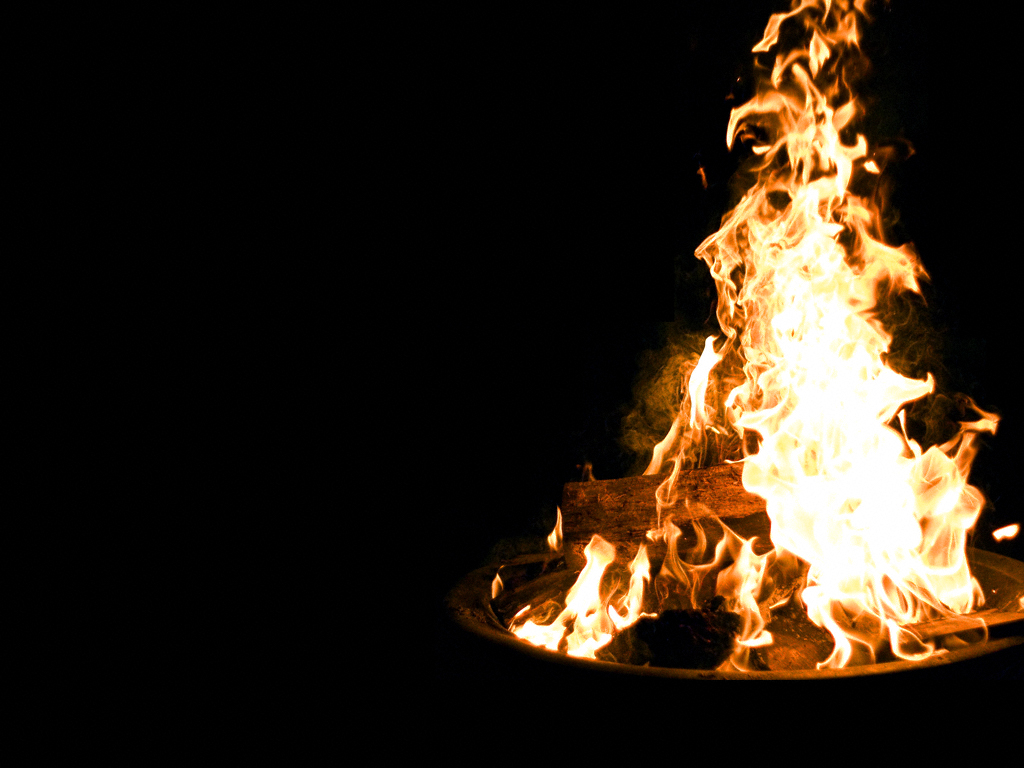
In any case, I don't get the obsession with the bonfires. I can understand people who want to cook over a campfire -- the park does get a fair number of campers who have all the equipment for doing so and who really get into preparing every meal using the fire ring. The burning a tier of wood just for the sake of burning a tier of wood, though? That I don't get. Maybe it's because we heat with wood and I associate firewood with work: having spent time and energy creating a stash of firewood at home, it just feels wrong to waste wood, even at a park.

The guys with the massive woodpiles will use it all while they're here, too. It is astounding. They might only be here for two or three nights, but they will manage to burn every stick of firewood. Which might also be a "don't waste it" response. Having spent quite a bit of money to have that wood delivered, they're not going to waste any of it by leaving even one stick behind for other campers. People are strange. . .