Everyone who visits the Big Island of Hawai'i tends to visit the National Park, the one with the active volcano. I always wonder how many tourists also get to the three smaller units of the National Park system that cluster along the coast, two north of where we were staying in Kailua-Kona and one that is south. They're all different and they're all interesting.
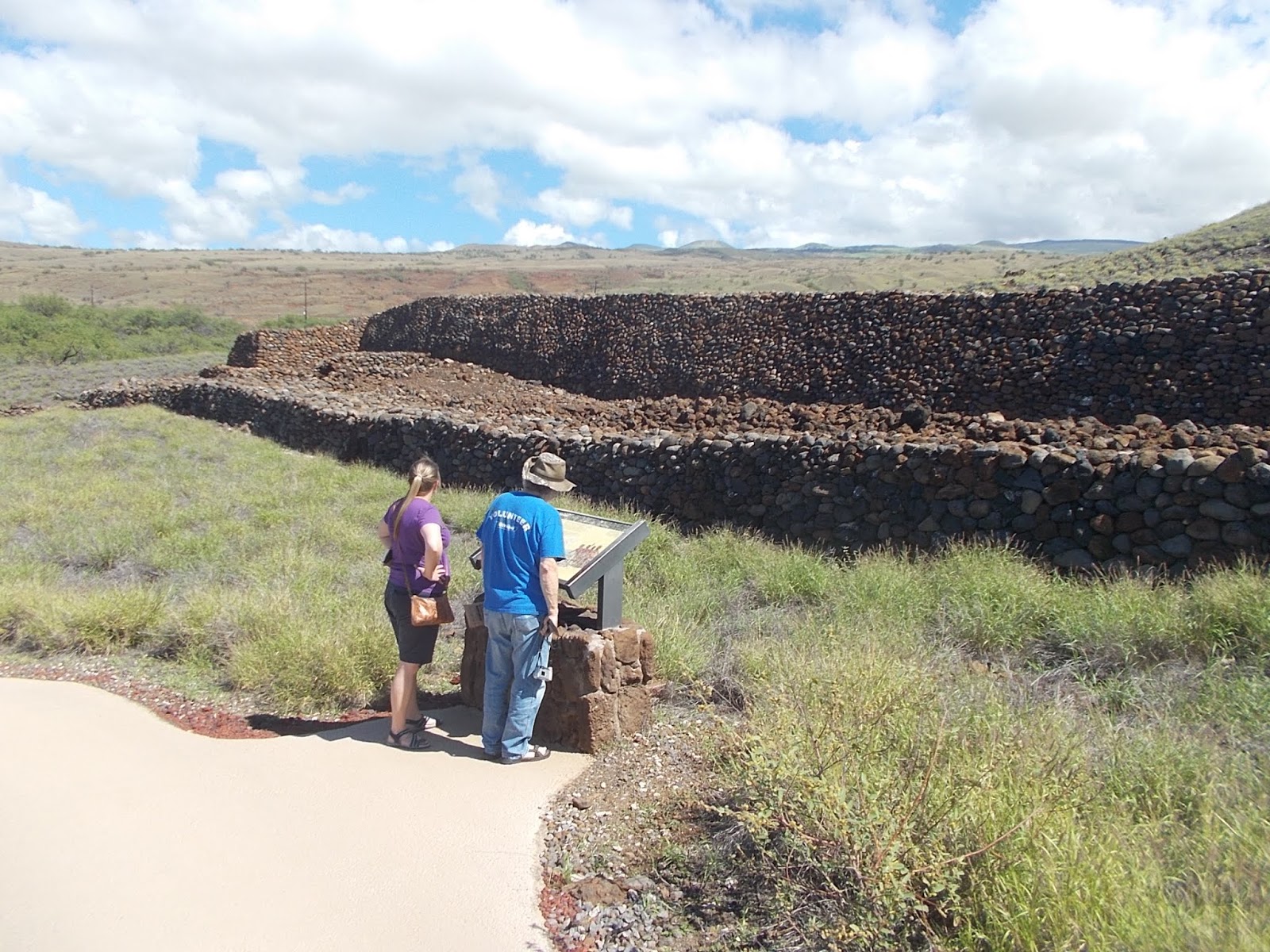
Pu'ukohola Heiau NHS is on the northwest side of Hawai'i near the modern town of Kawaihae. It is the site of the last traditional Hawaiian temple built and was constructed by Kamehameha I after hearing a prophecy that if he built a temple to the war god on Whale Hill he would succeed in uniting the islands under one leader, himself.
The temple is constructed of loose laid volcanic stone, no mortar. According to records -- and there was actual documentation from multiple sources; by the time Kamehameha was building the temple Europeans were visiting the islands -- the rock was moved from where it was quarried (collected) many miles away by a human chain of warriors loyal to Kamehameha. One gets the impression from the descriptions that it was similar to a bucket brigade. One guy would pick up a rock, carry it a short distance and then hand it off to the next dude in line. Like a relay race of sorts, except instead of batons they were passing along boulders.
The temple platform is huge, a massive structure on top of the hill. Unfortunately, on the day we visited the trail that leads to the top of the platform was closed. We were disappointed, of course, as the view from up there must be amazing. Other tourists were also disappointed and complained rather loudly about missing out on whale watching. The site is known as Whale Hill because it has always been a great location for seeing whales (humpbacks and others) come in fairly close to shore. Humpback whales apparently migrate to the area around Hawaii, Molokai, and Lanai every winter to give birth. We saw no whales from a vantage point along the trail that parallels the shore, but then we didn't stop at the park expecting to.
The Visitor Center at the park struck me as being a distinctly Mission 66 architectural style. I could be wrong. Both the Center and the restrooms building were built using volcanic rock, which makes perfect sense considering the stuff is everywhere. The Visitor Center is quite nice and, despite being fairly small, has an interesting display area with information on Hawaiian history. The restrooms building was closed for repairs/renovations/something, which definitely was not good. The porta-johns meant to substitute for it were, to put it mildly, disgusting. The contractor was apparently failing to keep them pumped out as often as they required.
We discovered after the fact that we missed one nifty feature of the park: the John Young home. Young was an Englishman who was shipwrecked in the islands and became a good friend and adviser to King Kamehameha I. He married the king's niece, became governor of the island of Hawaii, and his granddaughter, Emma, became Queen when she married Kamehameha IV. His home was the oldest European style building in the islands; today the site is basically a ruin with interpretive signage. It's located on the other side of the highway from the entrance to the main part of the park. We managed to miss signage for it as we continued on our way north. Moral of story: always read the entire park brochure before leaving the park.
Random thoughts about roadside art, National Parks, historic preservation, philosophy of technology, and whatever else happens to cross my mind.
Wednesday, April 22, 2020
Monday, April 20, 2020
The countdown has begun
I'm sheltering in the shade of the Sparklight pole, watching traffic zip by on US-191, and thinking that it can be really hard here in rural Arizona to grasp that big chunks of the rest of the country are a mess. People elsewhere are dying from a virus that not long ago only virologists knew existed, but other than stores putting up spit guards to protect the cashiers not much has changed locally. Well, Walmart did do an interesting barricade using shopping carts to channel people going into the store into a single line and get them to think about social distancing. The barricade was kind of cute. They also put trash cans next to cart returns in a no doubt vain attempt to get people to put their disposable gloves in the garbage instead of on the ground.
And it's not actually just rural Arizona. I can understand people here in Safford or Thatcher still acting like not much has changed. Graham County has had two confirmed cases of COVID-19, both of which were diagnosed over a month ago and both of which did not require hospitalization. It's hard to take a disease seriously when you see no local evidence of it. Tucson, on the other hand. . . Pima County has not been as much of a hot spot as the Phoenix area, but it has had quite a few cases and at least (as of the last time I checked) over a dozen deaths. We were in Tucson on Saturday. It was a bit odd.
Our first stop in Tucson was -- no surprise here -- at Pull-a-Part.The S.O. was looking for a part for my Focus. It being Saturday morning, it was busy. There was a line of people waiting to get into the store/junkyard. Parking was tight, and got tighter. The Kid and I were waiting in the car for the S.O. She finally got bored enough that she went for a walk to see if he'd even made it into the store yet. He had -- no sign of him in the line. When she got back to the car she said things were tense in the parking lot. When a car went to leave, there were multiple cars wanting the empty slot. Two guys got into a shouting match, both obviously totally pissed off and yelling in rapid fire Spanish. She said they were talking fast enough that she didn't understand anything except one phrase that must be universal: Fuck You! I would have sworn that Spanish contains some really colorful insults, ones that are much better than fuck you, but maybe they had exhausted all of them and the fuck you was just the final shot. Pull-a-Part. It's not just cheap car repair material. It's also entertainment.
It can also be lunch. There's a guy with a mini-van who sets up not far from the store entrance. He sells bagged snacks, cold drinks, and has food of some sort that requires condiments. Hot dogs and burros maybe? He's even got a few folding chairs so you can dine in rather than walking your snacks back to your car. We chose not to patronize him. Instead, after the S.O. emerged triumphant, we went looking for a Popeye's drive-through for lunch, and then decided to seek out a Target.
Holy wah. The parking lot was full. You would not have known there was a Stay at Home advisory in place. The store had signs up saying they were limiting the number of customers in the store at a time, but you could have fooled me. It looked like Target always does on a Saturday afternoon: crowded. If I end up dead from the world's worst chest cold, I'll have to blame the desire for cheap cat toys, because that was about all I purchased -- a scratching post for Beelzebub. Oh, and some Oregon Chai. In any case, it was pretty clear most of the people in Target were not taking social distancing seriously. They were also mostly young (as in not gray hairs), the age slice of the population most likely to walk around asymptomatic.
The Kid and I had talked about stopping at JoAnn's Fabrics but when we saw the line there changed our minds. JoAnn's was keeping in store numbers low; there was a line of probably 100 people waiting to get in, all spaced the recommended 6 feet apart. You know, I like fondling yard goods as much as the next person, but there isn't a bolt of batik on the planet that could get me to stand in line for more than 2 seconds, let alone potentially hours. The ladies in that line must have a serious addiction to sewing and crafting.
In any case, I think that was the last trip to Tucson for us. This was the third time we'd been there this spring; that's more than enough. Traffic is horrible, and there's always something kind of seedy and run-down feeling about the city even in the good neighborhoods.
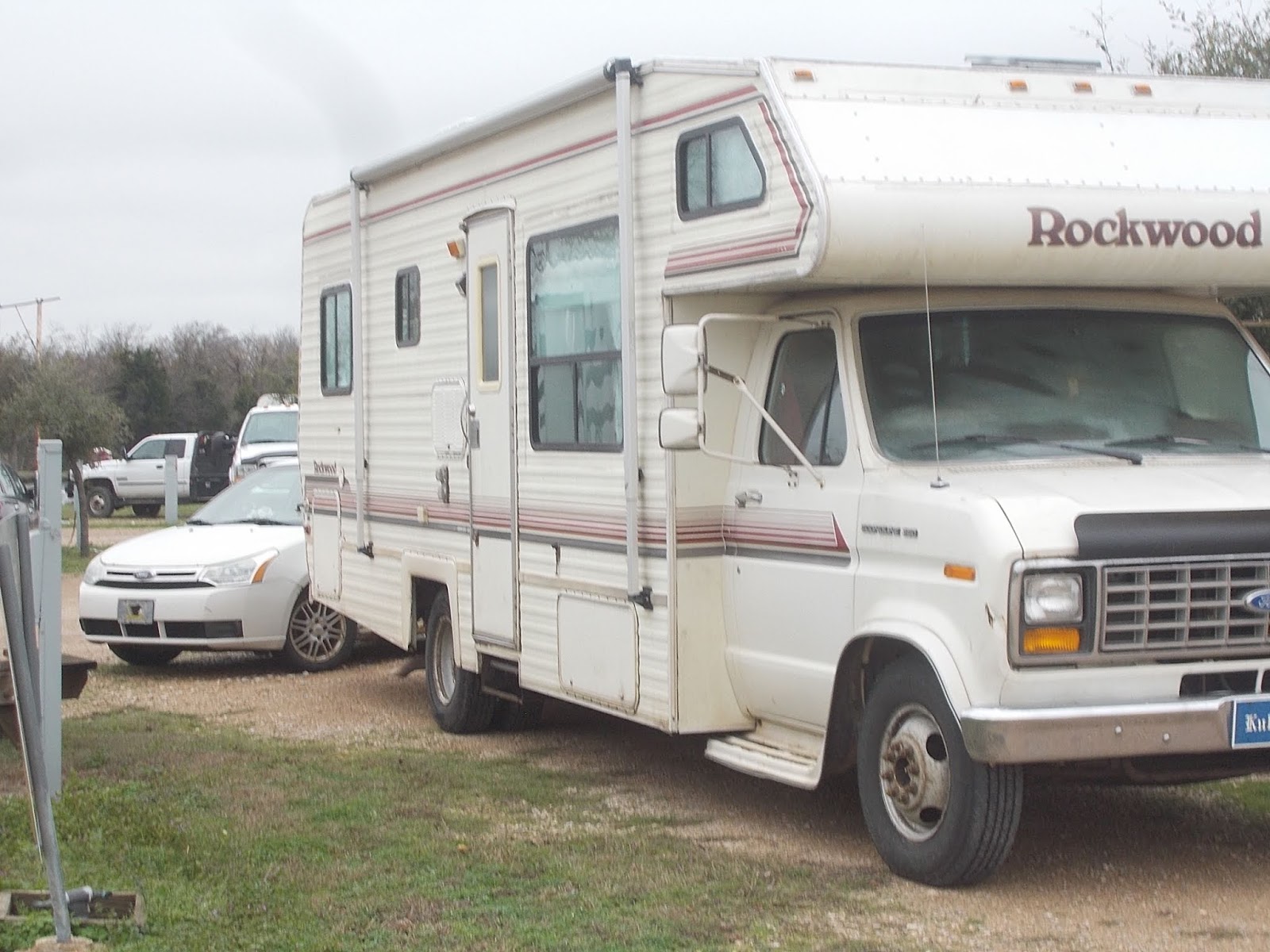
As I've mentioned before, the S.O. and I are staying home, sort of, in the Guppy parked at the Stables & RV Park at the Graham County fairgrounds. It is not a bad place to be -- it comes with built-in social distancing because the RV area is only 25% occupied (total of 5 RVs in area that could accommodate 20) and those RVs are widely spaced. That's better spacing than we would have gotten had we been able to get into our first couple of choices, both of which were totally full and are set up with sites so close together people with slide-outs get to worry about hitting the neighbor's rig. There is a communal shower house but it's pretty clear I'm the only woman using the ladies' side. The S.O. tells me that for the last couple of weeks it's basically been just him on the men's, too. In short, no fears of contagion from that particular facility.
In any case, here we sit waiting for it to get far enough into May in the Upper Peninsula that we can be reasonably sure of being able to drive the Guppy on to our property without either having to bust through snowbanks or sinking in axle deep mud. Going by photos a friend who lives a mile or so away from where we do, the smart thing to do is just sit here until the next rent payment on our site is due, which is still a good 2-1/2 weeks away.
I had been worried about just where we'd stop with the Guppy en route. I was having visions of Walmart parking lots and interstate rest areas. Well, turns out KOA has opted to stay open nation-wide. They rightly view campgrounds as essential services. There are a surprisingly large number of fulltime RVers out there. Folks who do not have a bricks and sticks home to go back to; their RV is their only residence. Some of those people got left hanging when work-kamper jobs got cancelled, some were doing the ambling around the country spending the maximum allowed time in state and federal campgrounds, and some were extended stay to begin with: KOA does do monthly rates.
And then there are the snowbirds, of course. People like us who went south for the winter and would like to go home eventually. KOA campgrounds have closed communal facilities like shower houses but noted that people traveling in motorhomes or with travel trailers are self-contained. As long as there are hook-ups, they can shelter in place in their RV with minimal social contact. The KOAs are now set up so you can register and pay for a spot using a phone or the internet; no need to step into an office and talk with anyone in person.
I have to say quite honestly that KOAs would not be my first choice when ambling home. I'd much prefer a state park or federal campground. But, as the cliche goes, any port in a storm. Now all I have to is get out the KOA directory and start plotting a course north.
And it's not actually just rural Arizona. I can understand people here in Safford or Thatcher still acting like not much has changed. Graham County has had two confirmed cases of COVID-19, both of which were diagnosed over a month ago and both of which did not require hospitalization. It's hard to take a disease seriously when you see no local evidence of it. Tucson, on the other hand. . . Pima County has not been as much of a hot spot as the Phoenix area, but it has had quite a few cases and at least (as of the last time I checked) over a dozen deaths. We were in Tucson on Saturday. It was a bit odd.
Our first stop in Tucson was -- no surprise here -- at Pull-a-Part.The S.O. was looking for a part for my Focus. It being Saturday morning, it was busy. There was a line of people waiting to get into the store/junkyard. Parking was tight, and got tighter. The Kid and I were waiting in the car for the S.O. She finally got bored enough that she went for a walk to see if he'd even made it into the store yet. He had -- no sign of him in the line. When she got back to the car she said things were tense in the parking lot. When a car went to leave, there were multiple cars wanting the empty slot. Two guys got into a shouting match, both obviously totally pissed off and yelling in rapid fire Spanish. She said they were talking fast enough that she didn't understand anything except one phrase that must be universal: Fuck You! I would have sworn that Spanish contains some really colorful insults, ones that are much better than fuck you, but maybe they had exhausted all of them and the fuck you was just the final shot. Pull-a-Part. It's not just cheap car repair material. It's also entertainment.
It can also be lunch. There's a guy with a mini-van who sets up not far from the store entrance. He sells bagged snacks, cold drinks, and has food of some sort that requires condiments. Hot dogs and burros maybe? He's even got a few folding chairs so you can dine in rather than walking your snacks back to your car. We chose not to patronize him. Instead, after the S.O. emerged triumphant, we went looking for a Popeye's drive-through for lunch, and then decided to seek out a Target.
Holy wah. The parking lot was full. You would not have known there was a Stay at Home advisory in place. The store had signs up saying they were limiting the number of customers in the store at a time, but you could have fooled me. It looked like Target always does on a Saturday afternoon: crowded. If I end up dead from the world's worst chest cold, I'll have to blame the desire for cheap cat toys, because that was about all I purchased -- a scratching post for Beelzebub. Oh, and some Oregon Chai. In any case, it was pretty clear most of the people in Target were not taking social distancing seriously. They were also mostly young (as in not gray hairs), the age slice of the population most likely to walk around asymptomatic.
The Kid and I had talked about stopping at JoAnn's Fabrics but when we saw the line there changed our minds. JoAnn's was keeping in store numbers low; there was a line of probably 100 people waiting to get in, all spaced the recommended 6 feet apart. You know, I like fondling yard goods as much as the next person, but there isn't a bolt of batik on the planet that could get me to stand in line for more than 2 seconds, let alone potentially hours. The ladies in that line must have a serious addiction to sewing and crafting.
In any case, I think that was the last trip to Tucson for us. This was the third time we'd been there this spring; that's more than enough. Traffic is horrible, and there's always something kind of seedy and run-down feeling about the city even in the good neighborhoods.
As I've mentioned before, the S.O. and I are staying home, sort of, in the Guppy parked at the Stables & RV Park at the Graham County fairgrounds. It is not a bad place to be -- it comes with built-in social distancing because the RV area is only 25% occupied (total of 5 RVs in area that could accommodate 20) and those RVs are widely spaced. That's better spacing than we would have gotten had we been able to get into our first couple of choices, both of which were totally full and are set up with sites so close together people with slide-outs get to worry about hitting the neighbor's rig. There is a communal shower house but it's pretty clear I'm the only woman using the ladies' side. The S.O. tells me that for the last couple of weeks it's basically been just him on the men's, too. In short, no fears of contagion from that particular facility.
In any case, here we sit waiting for it to get far enough into May in the Upper Peninsula that we can be reasonably sure of being able to drive the Guppy on to our property without either having to bust through snowbanks or sinking in axle deep mud. Going by photos a friend who lives a mile or so away from where we do, the smart thing to do is just sit here until the next rent payment on our site is due, which is still a good 2-1/2 weeks away.
I had been worried about just where we'd stop with the Guppy en route. I was having visions of Walmart parking lots and interstate rest areas. Well, turns out KOA has opted to stay open nation-wide. They rightly view campgrounds as essential services. There are a surprisingly large number of fulltime RVers out there. Folks who do not have a bricks and sticks home to go back to; their RV is their only residence. Some of those people got left hanging when work-kamper jobs got cancelled, some were doing the ambling around the country spending the maximum allowed time in state and federal campgrounds, and some were extended stay to begin with: KOA does do monthly rates.
And then there are the snowbirds, of course. People like us who went south for the winter and would like to go home eventually. KOA campgrounds have closed communal facilities like shower houses but noted that people traveling in motorhomes or with travel trailers are self-contained. As long as there are hook-ups, they can shelter in place in their RV with minimal social contact. The KOAs are now set up so you can register and pay for a spot using a phone or the internet; no need to step into an office and talk with anyone in person.
I have to say quite honestly that KOAs would not be my first choice when ambling home. I'd much prefer a state park or federal campground. But, as the cliche goes, any port in a storm. Now all I have to is get out the KOA directory and start plotting a course north.
Monday, April 13, 2020
Easter in the desert
Sitting in the shade of the Sparklight pole and getting caught up on what's been happening in the world. Life where we are at the moment has a definitely surreal feeling (which is no doubt true of almost everywhere else, too, in various ways). Saw one of the neighbors in the RV park going for a walk this morning wearing a face mask. Okay, dude, that's a little weird. It's a bright sunny day in Arizona, there are no other humans within a hundred feet of you, and everyone that is around the RV park has been here as long as you have. I can see wearing a mask into Walmart, assuming a person has one, but when the only other warm-blooded creatures outside at the same time as you are a couple of horses?
On the other hand, we went over to The Kid's yesterday for Easter dinner. Saw one of her neighbors getting picked up by his car pool to head for the Morenci mine (yes, leached sulfide copper mines apparently qualify as essential because the local mines are operating the same way they always do, full shifts seven days a week). No mask, of course, just casually stowing his hard hat and back pack in the vehicle and heading for work like he does on a regular basis. Not that it was particularly surprising to see him without a face mask.
In what is a not surprising and typically American reaction to a public health crisis, way too many people are doing the exact opposite of what would be logical. Young people hear that COVID kills old people so they don't worry about it. The CDC and state health departments are running nonstop PSAs explaining why self-quarantine and face masks in public are necessary, but it's not registering with the people who should be hearing it. The purpose of the face masks, after all, is not to protect the wearer other than it stops you from touching your mouth or nose without remembering to wash your hands first. A homemade cloth face mask or even a genuine N95 mask is not going to stop most viruses from being inhaled if you happen to walk through a high enough concentration of them.
Corona viruses, like all viruses, are unbelievably tiny. Remember, a virus isn't even a living organism, it's just a chunk of DNA or RNA with a thin protective coating (one that breaks down fast in ordinary soap and water, in direct sunlight, and when hit with bleach or other strong cleansers)(for what it's worth, Purell is useless. Purell can kill bacteria, but bacteria are alive and viruses aren't).
Nope, the purpose of the mask is to keep people who are asymptomatic or are in that infected but not yet sick stage from spewing their pathogens on the rest of us. The mask may not keep viruses out, but it can keep your disgusting virus-laded spittle from landing any place other than the inside of the mask. Remember, one of the more insidious things about COVID-19 is it has a really high percentage of persons who are either asymptomatic or have such mild symptoms they pass the few symptoms they have off as a mild cold or a touch of a seasonal allergy. For about 80% of infected persons, COVID-19 is a minor blip, not an issue.
The asymptomatic factor, incidentally, is one reason I think health departments should be testing as many people as humanly possible, not just people who are unlucky enough to have symptoms or know they've been exposed. One of the big unknowns with COVID-19 is just how widespread it is. All the numbers we see now are based on known cases, and the only way a case becomes known is for a person to be tested. How far has the virus spread? Has it hit the point that Tony Fauci fears, a level that will turn it endemic, a widespread pathogen that never goes away but has seasonal flare-ups like influenza? Or, horrifying though the numbers currently are (well over half a million known cases), is the virus still confined to a relatively small percentage of the U.S. population? As an eternal pessimist, I tend to think along similar lines as Dr. Fauci.
On a more cheerful note, The Kid and I spent a few hours yesterday morning hiking at Gila Box Riparian National Conservation Area. We were hoping the cacti had begun blooming, but not quite. By next weekend the prickly pear should be spectacular out there. We did a fairly short hike, one that started close to the wildlife viewing platforms overlooking Bonita Creek, wandered up to the Kearney monument, ambled along the edge of the Riverview Campground (really nice, by the way, -- the BLM does a nice job on developed campground design), and eventually looped back to the wildlife viewing platforms. We sat for awhile, admired the soaring abilities of turkey vultures, and decided that once again we were there at the wrong time of day to see bighorn sheep.
The BLM day use and camping areas are still open. Maybe their management decided their designs have social distancing built into them. I know every BLM campground I've seen has the individual campsites widely spaced and even picnic areas position the tables and grills pretty far apart. I'd kind of like to camp out at Riverview because maybe then we'd actually get to see some of the wildlife, but I'm not real keen on us driving the Guppy over a one-lane road with 19% grades (short ones, granted, but not super short) and some interesting blind hairpin turns. Then again, I woudn't be behind the wheel. . .
Photos are from yesterday's hike. Can never remember what the yellow flowers are called, but there were a lot of them. River view is of the Gila River as seen from the Kearney memorial. The monument commemorates where Phil Kearney and U.S. army troops camped while en route to California in 1846. One assumes they actually set up the encampment down by the river and not on top of a hill, but who knows?
On the other hand, we went over to The Kid's yesterday for Easter dinner. Saw one of her neighbors getting picked up by his car pool to head for the Morenci mine (yes, leached sulfide copper mines apparently qualify as essential because the local mines are operating the same way they always do, full shifts seven days a week). No mask, of course, just casually stowing his hard hat and back pack in the vehicle and heading for work like he does on a regular basis. Not that it was particularly surprising to see him without a face mask.
In what is a not surprising and typically American reaction to a public health crisis, way too many people are doing the exact opposite of what would be logical. Young people hear that COVID kills old people so they don't worry about it. The CDC and state health departments are running nonstop PSAs explaining why self-quarantine and face masks in public are necessary, but it's not registering with the people who should be hearing it. The purpose of the face masks, after all, is not to protect the wearer other than it stops you from touching your mouth or nose without remembering to wash your hands first. A homemade cloth face mask or even a genuine N95 mask is not going to stop most viruses from being inhaled if you happen to walk through a high enough concentration of them.
Corona viruses, like all viruses, are unbelievably tiny. Remember, a virus isn't even a living organism, it's just a chunk of DNA or RNA with a thin protective coating (one that breaks down fast in ordinary soap and water, in direct sunlight, and when hit with bleach or other strong cleansers)(for what it's worth, Purell is useless. Purell can kill bacteria, but bacteria are alive and viruses aren't).
Nope, the purpose of the mask is to keep people who are asymptomatic or are in that infected but not yet sick stage from spewing their pathogens on the rest of us. The mask may not keep viruses out, but it can keep your disgusting virus-laded spittle from landing any place other than the inside of the mask. Remember, one of the more insidious things about COVID-19 is it has a really high percentage of persons who are either asymptomatic or have such mild symptoms they pass the few symptoms they have off as a mild cold or a touch of a seasonal allergy. For about 80% of infected persons, COVID-19 is a minor blip, not an issue.
The asymptomatic factor, incidentally, is one reason I think health departments should be testing as many people as humanly possible, not just people who are unlucky enough to have symptoms or know they've been exposed. One of the big unknowns with COVID-19 is just how widespread it is. All the numbers we see now are based on known cases, and the only way a case becomes known is for a person to be tested. How far has the virus spread? Has it hit the point that Tony Fauci fears, a level that will turn it endemic, a widespread pathogen that never goes away but has seasonal flare-ups like influenza? Or, horrifying though the numbers currently are (well over half a million known cases), is the virus still confined to a relatively small percentage of the U.S. population? As an eternal pessimist, I tend to think along similar lines as Dr. Fauci.
On a more cheerful note, The Kid and I spent a few hours yesterday morning hiking at Gila Box Riparian National Conservation Area. We were hoping the cacti had begun blooming, but not quite. By next weekend the prickly pear should be spectacular out there. We did a fairly short hike, one that started close to the wildlife viewing platforms overlooking Bonita Creek, wandered up to the Kearney monument, ambled along the edge of the Riverview Campground (really nice, by the way, -- the BLM does a nice job on developed campground design), and eventually looped back to the wildlife viewing platforms. We sat for awhile, admired the soaring abilities of turkey vultures, and decided that once again we were there at the wrong time of day to see bighorn sheep.
The BLM day use and camping areas are still open. Maybe their management decided their designs have social distancing built into them. I know every BLM campground I've seen has the individual campsites widely spaced and even picnic areas position the tables and grills pretty far apart. I'd kind of like to camp out at Riverview because maybe then we'd actually get to see some of the wildlife, but I'm not real keen on us driving the Guppy over a one-lane road with 19% grades (short ones, granted, but not super short) and some interesting blind hairpin turns. Then again, I woudn't be behind the wheel. . .
Photos are from yesterday's hike. Can never remember what the yellow flowers are called, but there were a lot of them. River view is of the Gila River as seen from the Kearney memorial. The monument commemorates where Phil Kearney and U.S. army troops camped while en route to California in 1846. One assumes they actually set up the encampment down by the river and not on top of a hill, but who knows?
Saturday, April 11, 2020
Sometimes you dodge a bullet
Along with the usual reasons for wanting to spend part of the winter in Arizona -- avoiding snow, seeking sunlight, visiting friends and relatives, expanding one's mental horizons through travel -- The Kid had made plans for a family vacation elsewhere. She had decided to be generous and once again used her time share resort plan points to book a week in mid-February in Hawai'i.
The first time she shoved us on to an airplane back in 2016 it was just me and the S.O. This time she was able to find a two-bedroom suite in Kona so all three of us could go. At the time, there was some talk on the news about a novel virus affecting a region in China, but it didn't really register with us. We weren't going to China. We were going to Kailua-Kona. Mai tais, ahi ahi, palm trees, tacky shirts. People dropping dead from pneumonia half a world away did not affect us.
Except of course it could have. We traveled through two major airports, both with a lot of international travelers, going to Hawai'i and coming back -- Phoenix and Honolulu. Honolulu especially processes hordes of tourists and business people traveling to and from various Asian destinations. We saw numerous Asian travelers all wearing face masks. It did not register. If anything, we all assumed it was the typical notorious Japanese/Korean/Chinese germaphobia and industrial pollutants fear. It's been pretty common in China for many years for people to wear face masks outdoors because the industrial pollution is so bad. In retrospect, thank you numerous Asian travelers for wearing masks that may have protected some of us naifs from pathogens you were unknowingly exhaling.
[Blogger just did an interesting hiccough. Screen went blank and my draft post wound up published. Very strange. I will continue editing and eventually this may all seem a bit less unfinished. There may even be photos.]
In any case, we had a good time on the Big Island, wandered around playing tourist and doing some of the obligatory stuff (a luau, which turned out to actually be worth what it cost). I stumbled across a promotion being sponsored by local quilt shops -- an island shop hop in which each participating shop gave visitors a free pattern based on traditional Hawaiian petroglyphs -- and The Kid and I also found a decent book store. We dined at a restaurant we found out later is rated as one of the best in Hawaii, not just on one island, and we dined at low budget eateries that served traditional plate lunches. We visited Hawaiian Volcanoes National Park. I wondered again why anyone would want to live within 50 miles of an active volcano, let alone within spitting distance of one. We even lounged by the pool, all in blissful ignorance, cheerfully believing novel coronaviruses were a Chinese problem.
That blissful ignorance persisted for several weeks after getting home. Heard occasional news about the virus being found in this country, but, hey, a couple of cases, no big deal. The CDC and the state health departments will handle it. No problem. As a former CDC employee I knew the agency had been worried about outbreaks and national coordination and snuffing stuff before it could spread for a long time. Back in the waning days of the Bush administration I edited the final draft of the National Biosurveillance Strategic Plan that laid out some of the problems and made suggestions for future action. The Obama administration took the issues seriously; a specific office within the CDC was created to address preventing epidemics from turning into pandemics. I was optimistic.
I did not know then that the Moron in the White House in his bizarre eagerness to do as much damage as humanly possible in the shortest amount of time had eliminated that office. I did know he had slashed the CDC budget, but how much of an idiot do you have to be to get rid of an office designed to prevent something that could make The Walking Dead look like a reality show? Whatever that level is, Trump apparently has achieved it multiple times.
I found myself hoping recently that Trump had managed to French kiss Boris Johnson sometime in the past few weeks, but no such luck.
More thoughts in a day or two.
The first time she shoved us on to an airplane back in 2016 it was just me and the S.O. This time she was able to find a two-bedroom suite in Kona so all three of us could go. At the time, there was some talk on the news about a novel virus affecting a region in China, but it didn't really register with us. We weren't going to China. We were going to Kailua-Kona. Mai tais, ahi ahi, palm trees, tacky shirts. People dropping dead from pneumonia half a world away did not affect us.
Except of course it could have. We traveled through two major airports, both with a lot of international travelers, going to Hawai'i and coming back -- Phoenix and Honolulu. Honolulu especially processes hordes of tourists and business people traveling to and from various Asian destinations. We saw numerous Asian travelers all wearing face masks. It did not register. If anything, we all assumed it was the typical notorious Japanese/Korean/Chinese germaphobia and industrial pollutants fear. It's been pretty common in China for many years for people to wear face masks outdoors because the industrial pollution is so bad. In retrospect, thank you numerous Asian travelers for wearing masks that may have protected some of us naifs from pathogens you were unknowingly exhaling.
[Blogger just did an interesting hiccough. Screen went blank and my draft post wound up published. Very strange. I will continue editing and eventually this may all seem a bit less unfinished. There may even be photos.]
In any case, we had a good time on the Big Island, wandered around playing tourist and doing some of the obligatory stuff (a luau, which turned out to actually be worth what it cost). I stumbled across a promotion being sponsored by local quilt shops -- an island shop hop in which each participating shop gave visitors a free pattern based on traditional Hawaiian petroglyphs -- and The Kid and I also found a decent book store. We dined at a restaurant we found out later is rated as one of the best in Hawaii, not just on one island, and we dined at low budget eateries that served traditional plate lunches. We visited Hawaiian Volcanoes National Park. I wondered again why anyone would want to live within 50 miles of an active volcano, let alone within spitting distance of one. We even lounged by the pool, all in blissful ignorance, cheerfully believing novel coronaviruses were a Chinese problem.
| Ferns trying to grow in an old lava flow |
I did not know then that the Moron in the White House in his bizarre eagerness to do as much damage as humanly possible in the shortest amount of time had eliminated that office. I did know he had slashed the CDC budget, but how much of an idiot do you have to be to get rid of an office designed to prevent something that could make The Walking Dead look like a reality show? Whatever that level is, Trump apparently has achieved it multiple times.
I found myself hoping recently that Trump had managed to French kiss Boris Johnson sometime in the past few weeks, but no such luck.
More thoughts in a day or two.
Friday, April 10, 2020
The blogging drought has ended. Maybe.
We have been in Arizona for over two months now and I have basically posted nothing. No photos since San Angelo, no thoughts on what we did or did not encounter along the way, no discussion of how we wound up camped at the county fairgrounds instead of an RV park with more bells and whistles, and for sure nothing about COVID-19 except one cartoon.
It's been an interesting two months. We had a wee bit of trouble getting here -- the mechanical issues in Texas capped by negotiating a messy snowstorm as we traversed the Davis and Guadalupe Mountains -- and then were greeted by a singular lack of available RV spaces. I knew getting into the 55+ RV park we stayed at in 2016-2017 was a long shot because we weren't able to make reservations. I did not, however, expect the second choice park to also be full. And the third choice. We were starting to wonder if we might end up dry camping out in the Coronado National Forest in one of the dispersed camping areas. There are a couple spots that the Guppy can get into without too much trouble, but it wasn't something we really wanted to. We also thought about the established BLM campgrounds, another option we weren't overly keen on -- the Guppy could manage the road out to the Riverview Campground in the Gila Box National Riparian Conservation Area, but the single lane road with the blind curves would not be fun.
Then I remembered seeing signage several years ago for RV parking at the county fairgrounds. So that's where we are: the Kevin Burns Stables & RV Park (or maybe it's RV Park & Stables) at the Graham County Parks & Recreation Complex. The RV sites are lined up along a fence that separates the parade paddock from the stables. There are 20 full hookup RV sites; at the moment, only five are occupied. Given that the other RV parks were bulging at the seams when we arrived in February, a combination of snowbirds and copper miners (the Safford and Morenci copper mines are both hiring so if you know any down and out depressed unemployed coal miners tell them to check out the Freeport-McMoRan website), it surprised me a bit that the fairgrounds park was so empty.
Granted, there is always a faint whiff of horse dung in the air, but other than that it's really not much different than any other Arizona RV park. The site is basically bare dirt, and there's no shade for most of the day, but that's true of just about every RV park I've seen in this state. It's fairly bare bones, no clubhouse, swimming pool, or laundry room, but it does have an amazing view of the Pinalenos, Mount Graham and the Pope Scope. It's quiet. It's secure. If you want to do extended stay here you have to pass a police background check. Because it's part of the recreation complex, there are some nice picnic areas close by, there are playgrounds (currently closed thanks to COVID-19), and there's a trout fishing pond stocked by Arizona's fish and wildlife agency.
One thing the fairgrounds lacked was wifi. That definitely cramped my style as well as keeping me out of the Internet swamps as much as I normally like to wade in them. My phone is a TracFone; it doesn't have a whole lot of mobile data for me to burn. We were going to the Safford Public Library to check emails and do other Internet stuff, but that had its limitations: the library was open only 4 days a week, it tended to fill with kids (junior high and high school in the afternoon; preschoolers being read to in the mornings), and it wasn't real close to the fairgrounds. Then health officials found two COVID-19 infected persons in the county. County officials moved remarkably fast to shut things down and to encourage people to stay home. They were ahead of the state when it came to taking things seriously. Although I can't dis the Republican governor too much. He did issue an executive order closing bars and restaurants in counties with COVID-19 cases pretty quickly, at least compared with what's happening in a lot of other red states.
No library, no easy access to wifi. Choices became burn data on the cell phone or sit on a bench in the middle of Walmart. Notice I left out the third and most logical choice: forget about the Internet, Facebook, blogging, whatever for awhile. After all, we're lucky enough to be sheltering in place in a location with no near neighbors (we see the other RVers only in passing, not to talk with), where the days are sunny and pleasant, and we could do other things, like sit outside sipping cold beverages and reading. If we were back in the U.P., we'd be stuck inside watching it snow and cursing the slush covered mud (the muddy slush?). We don't need the Internet.
Except I sort of do. I do the online stuff for the Baraga County Historical Museum -- the EBay sales (anyone interested in some instant ancestors? We have some late 19th century cabinet cards we'd love to unload), the Facebook page (which hasn't been updated in much too long), the Amazon book sales, the emails from various people asking questions that always make me want to respond with "Would you like me to Google that for you?" In short, in addition to my own desire to waste time with social media, I'm obligated to be online occasionally for other reasons.
So how am I on the Internet now, inquiring minds want to know. Corporate generosity, believe it or not. One of the local ISPs decided to set up a couple free hot spots in town to help out folks who were in that category of people who relied on places like McDonald's or the library to stay connected. One of those free hot spots is in a fairgrounds parking lot. It's not quite close enough to the RV area to reach the Guppy, but it's a whole lot closer than a bench at Walmart. So here I am, sitting in my car in the shade of a telephone pole with an antenna on it. A pole which, incidentally, does not actually cast much shade and this is Arizona. My Focus is evolving into a sauna. Time to salt in a few photos, proofread, and then head back to the Guppy for the above mentioned cold beverage.
Next time, I may actually do my version of A Journal of the Plague Years. Or not. In these interesting times, you may find a description of the best RV camping in Fort Stockton, Texas, (the Walmart parking lot) more diverting.
| Only time fairgrounds have been busy; a rodeo weekend in February. |
It's been an interesting two months. We had a wee bit of trouble getting here -- the mechanical issues in Texas capped by negotiating a messy snowstorm as we traversed the Davis and Guadalupe Mountains -- and then were greeted by a singular lack of available RV spaces. I knew getting into the 55+ RV park we stayed at in 2016-2017 was a long shot because we weren't able to make reservations. I did not, however, expect the second choice park to also be full. And the third choice. We were starting to wonder if we might end up dry camping out in the Coronado National Forest in one of the dispersed camping areas. There are a couple spots that the Guppy can get into without too much trouble, but it wasn't something we really wanted to. We also thought about the established BLM campgrounds, another option we weren't overly keen on -- the Guppy could manage the road out to the Riverview Campground in the Gila Box National Riparian Conservation Area, but the single lane road with the blind curves would not be fun.
Then I remembered seeing signage several years ago for RV parking at the county fairgrounds. So that's where we are: the Kevin Burns Stables & RV Park (or maybe it's RV Park & Stables) at the Graham County Parks & Recreation Complex. The RV sites are lined up along a fence that separates the parade paddock from the stables. There are 20 full hookup RV sites; at the moment, only five are occupied. Given that the other RV parks were bulging at the seams when we arrived in February, a combination of snowbirds and copper miners (the Safford and Morenci copper mines are both hiring so if you know any down and out depressed unemployed coal miners tell them to check out the Freeport-McMoRan website), it surprised me a bit that the fairgrounds park was so empty.
One thing the fairgrounds lacked was wifi. That definitely cramped my style as well as keeping me out of the Internet swamps as much as I normally like to wade in them. My phone is a TracFone; it doesn't have a whole lot of mobile data for me to burn. We were going to the Safford Public Library to check emails and do other Internet stuff, but that had its limitations: the library was open only 4 days a week, it tended to fill with kids (junior high and high school in the afternoon; preschoolers being read to in the mornings), and it wasn't real close to the fairgrounds. Then health officials found two COVID-19 infected persons in the county. County officials moved remarkably fast to shut things down and to encourage people to stay home. They were ahead of the state when it came to taking things seriously. Although I can't dis the Republican governor too much. He did issue an executive order closing bars and restaurants in counties with COVID-19 cases pretty quickly, at least compared with what's happening in a lot of other red states.
| It's been a wet spring; there are gazillions of wildflowers. |
No library, no easy access to wifi. Choices became burn data on the cell phone or sit on a bench in the middle of Walmart. Notice I left out the third and most logical choice: forget about the Internet, Facebook, blogging, whatever for awhile. After all, we're lucky enough to be sheltering in place in a location with no near neighbors (we see the other RVers only in passing, not to talk with), where the days are sunny and pleasant, and we could do other things, like sit outside sipping cold beverages and reading. If we were back in the U.P., we'd be stuck inside watching it snow and cursing the slush covered mud (the muddy slush?). We don't need the Internet.
Except I sort of do. I do the online stuff for the Baraga County Historical Museum -- the EBay sales (anyone interested in some instant ancestors? We have some late 19th century cabinet cards we'd love to unload), the Facebook page (which hasn't been updated in much too long), the Amazon book sales, the emails from various people asking questions that always make me want to respond with "Would you like me to Google that for you?" In short, in addition to my own desire to waste time with social media, I'm obligated to be online occasionally for other reasons.
| Discouraging grave robbers? |
So how am I on the Internet now, inquiring minds want to know. Corporate generosity, believe it or not. One of the local ISPs decided to set up a couple free hot spots in town to help out folks who were in that category of people who relied on places like McDonald's or the library to stay connected. One of those free hot spots is in a fairgrounds parking lot. It's not quite close enough to the RV area to reach the Guppy, but it's a whole lot closer than a bench at Walmart. So here I am, sitting in my car in the shade of a telephone pole with an antenna on it. A pole which, incidentally, does not actually cast much shade and this is Arizona. My Focus is evolving into a sauna. Time to salt in a few photos, proofread, and then head back to the Guppy for the above mentioned cold beverage.
Next time, I may actually do my version of A Journal of the Plague Years. Or not. In these interesting times, you may find a description of the best RV camping in Fort Stockton, Texas, (the Walmart parking lot) more diverting.
Tuesday, March 3, 2020
A Rare Misdiagnosis
It wasn’t a fuel line problem.
The Guppy’s behavior certainly resembled that of a beast starved for sustenance. It stalled out going up hills, which definitely made it seem like gas wasn’t making it from the fuel tank located toward the rear of the vehicle to the engine. So when we limped into Brownwood, Texas, and the S.O. and Billy Cook conferred, they decided the first step was to change the fuel filter.
| Mooch docking in Brownwood |
Which they did. Then they ran the
Guppy for awhile – problem seemed to be solved. We’d had a good time in
Brownwood, been lucky enough to meet a really nice person who let us mooch dock
in her yard while the guys engaged in male bonding over the Guppy, but the filter
was changed, Guppy was running, time to move on down the road.
I think we made it 36 miles west
of Brownwood before the Guppy let out an asthmatic sigh and coasted to the side
of the road. So we turned around and headed back to Carol’s yard. The filter
obviously was not the problem. It must be the fuel pump.
There was a time where when a
vehicle’s fuel pump died, you knew it immediately. There was no doubt about it.
The device was purely mechanical, and when it quit, it quit. Now, thanks to the
incessant need of engineers to make everything ever more complicated and the
prevalence of various electronics in a vehicle’s various systems, it is
possible for a fuel pump to go through long, complicated death throes that an
amateur actor chewing up the scenery in a Shakespearean tragedy (or a Mel
Brooks farce) would envy. There was also the question of “How many fuel pumps
does the Guppy have?”
| Mistletoe. A couple trees in Carol's yard were loaded with it. |
This would seem to be a simple
question to answer. It wasn’t. The S.O. and Billy tossed the question around a
lot. Is there a fuel pump in the gas tank? What if it’s the one that is dying?
Asking the experts at the auto parts store didn’t help. Neither did Googling
information about the Ford engine that powers the Guppy. That particular model
year it appeared that some E-350s rolling off the assembly line did indeed have
two fuel pumps. Some did not. If there was a pump in the tank and it was bad,
the only way to replace it would be to drop the fuel tank. This was not a
pleasant thought when it’s a fairly large tank (30 or so gallons), the tank was
full when the Guppy left Brownwood, and even with the shit fuel economy RVs get a round trip of less than 80 miles wouldn’t have burned off much.
.
In the end, they decided to
change the fuel pump they could get at and hope that solved the problem. So
they did, and it seemed to work. The S.O. ran the Guppy in place for about an
hour. No problems, other than the cat being annoyed he had to sit in his
carrier outside so he wouldn’t end up asphyxiated. Then the guys took the Guppy
for a test drive. They were gone over half an hour, took the Guppy up some long
grades, and again, no problems. Great. Problem solved. Nice though Carol’s yard
was, after a week in Brownwood we were about to be on our way.
| Carol and Billy hoping they're about to see the last of us. |
So how far did we get, inquiring
minds want to know, before it became depressingly clear it hadn’t been the fuel
pump at all? About 100 miles.
The Guppy started stalling at about the 70 mile mark and flat out quit just south of San Angelo. We have AAA Plus, which includes RVs, so we called for a tow truck. After sitting by the side of the highway for what seemed like forever, a truck from Southern Industrial Towing arrived. The driver said their shop worked on RVs on a regular basis.
This was remarkably good news on
an otherwise depressing day. It can be unbelievably difficult to find a shop
that works on RVs. The dealers for the mechanical part (the Ford engine and
chassis, for example) don’t want to touch RVs. RV dealers don’t want to deal
with the mechanical part – they’ll fix a leak in the roof but avoid changing
spark plugs. Garages that service large trucks usually have so much business
with commercial trucks that they aren’t interested in repairing motorhomes. In
short, there was going to be no debate about where the Guppy was going for
diagnosis and repair: it was going to where the tow truck lived.
| While SIE worked on the Guppy, we wandered around San Angelo, which is how we stumbled across Fort Concho. Quite a bit of it is a reconstruction, although it's all very nicely done. |
The driver dragged the Guppy to a
safe spot for us to boondock for the night and pointed out where the
business was located just down the road. Based on the way the Guppy had been
behaving. The S.O. was sure that once everything cooled off, he’d be able to
restart the Guppy and drive it that last half mile. In the morning, that’s what
we did. Drove the Guppy to Southern Industrial Towing/Southern Industrial
Engines and described the problem.
| I have no idea what this building in San Angelo is, but it had one of the oddest roof-lines I've seen in a long time. |
The shop owner/manager then said
the phrase I think the S.O. kind of dreaded hearing: you’ve got a plugged
catalytic converter.
This was a problem the S.O. and
Billy Cook had considered and rejected. The S.O. managed to talk himself out of
it. He had even contemplated out loud while we were in Brownwood the idea of
crawling under the Guppy, dropping the exhaust system, and rodding the
converter – shoving a large pipe into the device to punch a hole through it so
exhaust would have a straight shot out instead of being channeled through the
honeycomb. He’s usually so good at figuring out what’s wrong with our vehicles
when they malfunction that I didn’t push it. So we both screwed up. In
retrospect, I should have nagged and urged him to do it while we were in
Carol’s yard. After all, even if it wasn’t the problem it wouldn’t have hurt.
It was an expensive mistake on
both our parts. Paying for repairs you know you could have avoided always hurts. I will say I have no complaints about Southern Industrial Engines. They
prioritized getting the Guppy back on the road and did good work. The price of
a new converter definitely made me flinch, but I’d Googled prices for catalytic
converters and knew it was going to be painful.
Now I’m waiting to see if AAA
comes through on paying for trip interruption expenses. Supposedly they’ll
reimburse up to $1,000 for things like hotel rooms, meals, and a rental car if
your travel is interrupted due to accidents, theft, or mechanical failures. We did have to stay in a hotel one night while the
Guppy was in the shop, and we did eat at a Texas Roadhouse, so I submitted a
claim. The hotel was not cheap. We managed to be in San Angelo during the
annual stock show and rodeo, an event that apparently draws a gazillion people
from around the state, because simply finding a hotel room was a challenge. To
say prices were a tad jacked up is an understatement. AAA had better come
through on the reimbursement because it was more painful to pay an astronomical
sum for a room at a Day’s Inn than it was to pay for the work on the Guppy. At
least with the latter, I know the charges were honest. (I can understand why businesses take advantage of those rare occasions when demand exceeds supply, but that doesn't mean I like it.)
For what it’s worth, if we drive
the Guppy enough miles, the replacement converter will pay for itself. The S.O.
is fairly sure the fuel economy has improved significantly. The Guppy has never
seen a gas station it didn’t want to pull into so even if we’ve just gone from
getting ~7 mpg to ~8 mpg, that’s a 14% improvement. (And, yes, the mileage on
motorhomes really is that bad, especially the older ones. This is why they
always say that if a person asks about fuel economy when shopping for an RV,
they really can’t afford to own one.)
Monday, February 3, 2020
Waco Mammoth National Monument
Waco Mammoth National Monument is one of the newer additions to the National Parks system. Obama signed the enabling legislation in 2016. I'm reasonably sure he wasn't too thrilled about it. Waco Mammoth is an interesting park but would it have risen to the level of national park status without some pressure from Texas Congress critters? I doubt it.
I'm going to be honest. If Waco Mammoth is of national significance, so are Ashfall Fossils State Park in Nebraska and Mastodon State Historic Site in Missouri (and no doubt a plethora of other local and state parks and historic sites across the country). In fact, from what I've seen and read both of those parks are more significant in terms of species diversity and regional history. Ashfall preserves what can only be described as a shitload of mammal fossils, the whole range of animals wandering the Great Plains during the Ice Age. I haven't been there (yet), but the descriptions are pretty amazing. Mastodon also has variety, although the major focus is on mastodons because that was the most dramatic find. Mastodon also has human history -- mastodon and other bones date from a fairly recent time period, a mere 11,000 or so years ago, so the site includes evidence of human hunting activity.
So what does Waco have? Mammoths. Lots of mammoths, granted, but that's basically it. A nursery herd of mammoths, one lonely camel, one as yet unidentified mammal, and a fragment of a young saber tooth tiger's tooth. Not that the nursery herd is actually on site. Researchers from Baylor University excavated sixteen female and juvenile Columbian mammoths about 40 years ago. The bones are now in storage. What is under the roof of the dig shelter are bones from several mammoths found in the process of preparing to backfill the original dig, including a humongous male who apparently died 30 or 40,000 years after the nursery herd got wiped out.
It is an interesting exhibit, and I have no doubt it is an important site in terms of paleontology. According to the interpretive ranger, the nursery herd is the only one ever found. What exactly killed sixteen mammoths simultaneously -- flash flood? mud slide? -- isn't known, but it certainly gave paleontologists a lot of material to work with. The fact more bones were found of animals that died thousands of years later suggests this particular location may have been periodically rather treacherous, which in turn suggests that if the dig is continued more bones will surface. A paleontologist has been added to the NPS staff so excavations will continue at the usual snail's pace -- trowels, small brushes, and lots and lots of patience make a dig in progress an excruciatingly boring process to observe -- and more good stuff may be found.
Waco Mammoth is, incidentally, one of those places that illustrates why when a member of the public approaches an expert and says "I don't know what this is but it might be important" it pays to look at the mystery object. The original discovery was made by two male teenagers hunting for arrowheads along the bank of a creek that feeds into the Brazos River. They spotted an unusually large bone sticking out of the dirt, knew it wasn't from a cow, and took it to Baylor. The university set up a dig. Sixteen mammoths later they thought they were done. They were also running out of storage space.
When the backfill revealed yet another dead mammoth, they decided to preserve it in situ, first with a temporary tent and then with a permanent structure. The land's owner donated the property to the city of Waco, a nonprofit foundation leapt into action, millions were raised to construct the permanent dig shelter, and the rest is history. The park has sufficient acreage to allow for short hikes, for picnicking, and for the ever popular dog-walking. Some of the most popular (going by the head counts of visitors) parks have high visitation not because the park is intrinsically interesting but because it exists on the edge of a suburb where good places to walk Fido are scarce -- I think there were more dogs at Kennesaw Mountain National Battlefield the day we were there than there were humans. But I'm wandering off topic, as usual. Waco Mammoth is a nice little park. Plenty of parking, even for RVs, friendly and knowledgeable staff, and interesting enough that stopping there didn't feel like a waste of time.
I'm going to be honest. If Waco Mammoth is of national significance, so are Ashfall Fossils State Park in Nebraska and Mastodon State Historic Site in Missouri (and no doubt a plethora of other local and state parks and historic sites across the country). In fact, from what I've seen and read both of those parks are more significant in terms of species diversity and regional history. Ashfall preserves what can only be described as a shitload of mammal fossils, the whole range of animals wandering the Great Plains during the Ice Age. I haven't been there (yet), but the descriptions are pretty amazing. Mastodon also has variety, although the major focus is on mastodons because that was the most dramatic find. Mastodon also has human history -- mastodon and other bones date from a fairly recent time period, a mere 11,000 or so years ago, so the site includes evidence of human hunting activity.
It is an interesting exhibit, and I have no doubt it is an important site in terms of paleontology. According to the interpretive ranger, the nursery herd is the only one ever found. What exactly killed sixteen mammoths simultaneously -- flash flood? mud slide? -- isn't known, but it certainly gave paleontologists a lot of material to work with. The fact more bones were found of animals that died thousands of years later suggests this particular location may have been periodically rather treacherous, which in turn suggests that if the dig is continued more bones will surface. A paleontologist has been added to the NPS staff so excavations will continue at the usual snail's pace -- trowels, small brushes, and lots and lots of patience make a dig in progress an excruciatingly boring process to observe -- and more good stuff may be found.
Waco Mammoth is, incidentally, one of those places that illustrates why when a member of the public approaches an expert and says "I don't know what this is but it might be important" it pays to look at the mystery object. The original discovery was made by two male teenagers hunting for arrowheads along the bank of a creek that feeds into the Brazos River. They spotted an unusually large bone sticking out of the dirt, knew it wasn't from a cow, and took it to Baylor. The university set up a dig. Sixteen mammoths later they thought they were done. They were also running out of storage space.
| Exterior view of the Dig Shelter |
Thursday, January 30, 2020
Where we've been, where we are, or Campground Reviews, sort of
We’ve been on the road for two weeks now, sort of ambling toward
southeastern Arizona and the opportunity to annoy the Younger Daughter. We had
more or less planned to be there by February 1, but it’s looking like that
timetable might get pushed back by a few days. The Guppy is currently suffering
from a glitch in the fuel line. At the moment we’re mooch docking in
Brownwood, Texas, while the S.O. and Billy Cook (aka BBC) work on replacing
various pieces parts. They thought they solved the problem by replacing a fuel
filter, Guppy fine ran for 36 miles. Managed to get it started and limped back to Brownwood. It died again after a little over 20 miles. Restarted, and now we’re back where they did the first
attempt at a fix.
We hit the road Tuesday afternoon, January 14. It was a later start
than we planned to make. Between a late morning dental appointment and the
inability to load anything perishable until the last minute, it was after 2
p.m. before the Guppy was rolling south. Our first night was in a motel in
Wisconsin. We had no desire to Wally dock when the interior of the Guppy was
still similar to a refrigerator. We just kept our fingers crossed that it did
not get cold enough in the Guppy for the canned goods we loaded to freeze. They
didn’t.
Unfortunately, it apparently not being our day, it got dark before we got very far up I-35. We got far enough north that the S.O. became concerned we'd missed the exit. We doubled back, and then saw a sign for Waco North RV Resort. We figured that was it. Pulled in, discovered the office was closed already but there was a number up. Called it, asked about a site for two nights, and was told what might be open. The woman on the phone said we could just come to the office in the morning and also told me how to find the wi-fi.
And now we're mooch docking. The Guppy developed a fuel line problem between Waco and Brownwood so we've been sitting for a few days. We were aiming for Brownwood so we could stop to visit Billy Cook, someone the S.O. and I met through blogging but had never met IRL until last week. He's a retired mechanic (among other things) but I don't think he expected the first phone call from us to be "Help. The Guppy died."
The current diagnosis is a dying fuel pump. A new one has been
purchased, but the weather turned to what might be termed shit:
dramatic thunderstorms and heavy rain during Monday night, mud and sopping wet
grass and a bitterly cold wind Tuesday. Not much mechanicking got done. Today’s
supposed to be better. One can hope.
It would, incidentally, be easy to just sit here for awhile if we didn’t
have a strong reason to get to Arizona soon. One of Billy’s friends allowed us
to park the Guppy in her yard, we have electricity, and we have access to her
house for replenishing water, taking showers, and doing laundry. She has been
remarkably generous to people who were complete strangers. Best of all, there is no snow on the ground. I even dug out the sandals and wore them for a day or two.
Then again, Billy has also been generous with his time and expertise. He was a
professional mechanic and knows more than the S.O. about vehicles, but he’s
also older than us, retired, and could easily have said he wasn’t up to doing
anything hands-on. But as usual I’m starting off with a long digression. The
title implies I was going to talk about the stops we’ve made along the way and
not just the Guppy’s current woes.
| This is a handicapped site so has more space next to it than the regular spots. |
In researching our possible route, I discovered the Illinois State
Fairgrounds in Springfield, Illinois, has a campground that is open year round.
During warmer months the campsites – 300 or so of them – are full hookups.
November through March there’s electricity, access to a heated showerhouse, and
a dump station. We wouldn’t need the later but power and a place to bathe
sounded good. We planned to stop there for two nights. That would give me time
to organize some of the chaos in the Guppy, get things that just got sort of
tossed in at the last minute stashed more neatly, and also allow us to play
tourist, which we did. Woke up on Friday to freezing rain so decided to sit for
a day, which gave us more time for organizing stuff in the Guppy.
This is not necessarily a bad thing. It worked fine for us. It was
actually a great place to stop at the start of our trip, just like it would be
at the end. If a person just needs a safe, clean place for a night or two, it’s
great. The showerhouse is clean, the fairgrounds overall are well maintained
and secure. The grounds are fenced with access through just one gate at night
and there are security patrols. It’s also quiet and easy to get to from I-55.
If a person is interested in Lincoln sites, it’s not far from the cemetery
where Abe is buried and it’s an easy drive into downtown Springfield to visit
Lincoln Home National Historic Site and the Abraham Lincoln Library. Best of
all, during the off season it’s cheap: $15 per night. It’s pricier in warmer
months, but they do veterans and seniors discounts. There is also decent wifi,
which seems to be a must for a lot of people these days.
Our next stop was at the Almost Home RV Park in Walnut Ridge, Arkansas.
I had found a couple of state parks close to US-67 that sounded interesting,
but high water levels made us re-think that option. It seemed like once we
dropped down into the five rivers area and saw that what was supposedly the
Current River was looking a whole lot more like a lake (definitely way over its
banks) we started thinking that maybe, just maybe, the campgrounds we’d
considered cwould be a wee bit damp. Almost Home was in a good location,
promised full hookups, and had the added bonus of a laundry room. When the S.O.
spotted the sign, we pulled in.
There was no one around, so we called the posted number at the
information kiosk. Turned out the owner was in Missouri at an auction. He told
us to pick a site and he’d collect a payment in the morning. So we did. Almost
Home is a small RV park and is probably an older one. It is clean, though, the
wifi was decent, the laundry room and
shower house were fine, and there’s a play area for kids. Some sites are pull-throughs.
Because the Guppy is a smallish motorhome, we did a back in. It seemed a little
bleak in January, but I think it would be quite pleasant once the pecans leaf
out. Most of the sites are shaded, or would be once there are leaves on the
trees. We were close to the highway so did hear truck traffic, but that’s true
of any RV park that’s close to a busy road.
As far as cost, it falls right in line with the typical private RV park
that provides FHUs and wifi: it was $35 per night if you pay cash, slightly
more if you use plastic (they tack on the fee Square charges them). I had no
complaints; we’d stay there again.
Our stop on Monday was our first on this trip at a federal campground, Beaver Dam in the Caney Lakes Recreation Area on the Kisatchie National Forest. I can say without hesitation it is the nicest national forest campground I've ever seen. We've stayed at some good ones, but this one hits all the high points. The individual campsites are big, none are in a bad location, the campground is clean and well maintained. The picnic tables had been replaced fairly recently (they look close to new), the showerhouse is spartan but clean, ditto the restrooms. There 27 sites with water and electricity, and the campground has a dump station so you can empty your wastewater tanks when you leave. I was regretting the decision to make it a just one night stop. I could see staying for the full 14 days you're allowed.
Like many federal campgrounds, sites are reservable through recreation.gov. This particular campground has a limited number of first come, first served sites in addition to the reservable. We did not have a reservation, but I had checked the website and saw that things were very slow in January. At a busier time of the year, I would have made a reservation rather than take a chance on doing a successful walk-in.
The itinerary put us in Waco, Texas, next. We planned to visit Yellowdog Grannie, do lunch and get caught up on what's been happening with her, and also take some time to play tourist in Waco. I wanted to visit Waco Mammoth National Monument, one of the newer parks in the National Park system. We hoped to stay at the same Corps of Engineers campground we'd stayed at before, but when we got to it the campground was closed. It is apparently still repairing flood damage from last year. That kind of threw us for a loop.
There was a private campground and marina nearby on Waco Lake so we went to check it out. One problem: no place labeled "Office" or directions on finding it, and when we called the number posted on a small sign the call went to voice mail. We drove around, discovered the RV area looked horrible, very raw and new with lots of loose gravel and no shade whatsoever -- the place is going to be hell in another month or two when the sun starts beating down on whoever is parked there, and no signage telling people where to find anyone in charge. So we did a Google search and found information for an RV park north of Waco. It looked pretty good on the web site.
We found a site that looked okay, well removed from the interstate, so figured it would be fine for two nights. The park didn't look like what I'd seen on the website, but websites get creative with photos all the time. It was a full hookup park, which was nice. And the wi-fi worked, although it was an open network so not particularly secure. We were feeling pretty relaxed, glad the day was over and we were off the road for awhile. That's when the freight train came through the living room.
Or at least that's what it felt like. Loud, very loud, and very close. Turned out that train was not an anomaly. There were a frequent trains. Luckily, the S.O. and I can tune out freight trains. I grew up in a house next to railroad tracks. I find it easier to sleep next to railroad tracks than next to a highway with truck traffic. In the morning we discovered the only way we could have been closer to the tracks would have been to be parked on the right-of-way. The back end, the "quiet" end of the park is next to the Burlington Northern Santa Fe tracks.
We also discovered when we drove up to West to do lunch that there are a lot of RV parks along I-35 north of Waco on both the east and west sides of the interstate. All of them seemed to have "Waco" and "North" in their names, so no doubt all of them are hoping to be mistaken for the really good Waco North (North Waco?) RV park, the one that's a Good Sam park and gets really high ratings in the Good Sam guide. Live and learn.
He found us a place to park the Guppy while he helped the S.O. with repairs. The initial diagnosis was a bad fuel filter. Replacing the filter didn't make a difference so then the fuel pump got swapped out. We're still waiting to see if the fuel pump was the problem. There will be a test drive or two locally before we venture farther down the highway.
If the Guppy had to develop a glitch, I guess Brownwood was a good place for it to happen. For sure it beats being broken down by the side of the highway.
Sunday, January 26, 2020
Lincoln Home National Historic Site
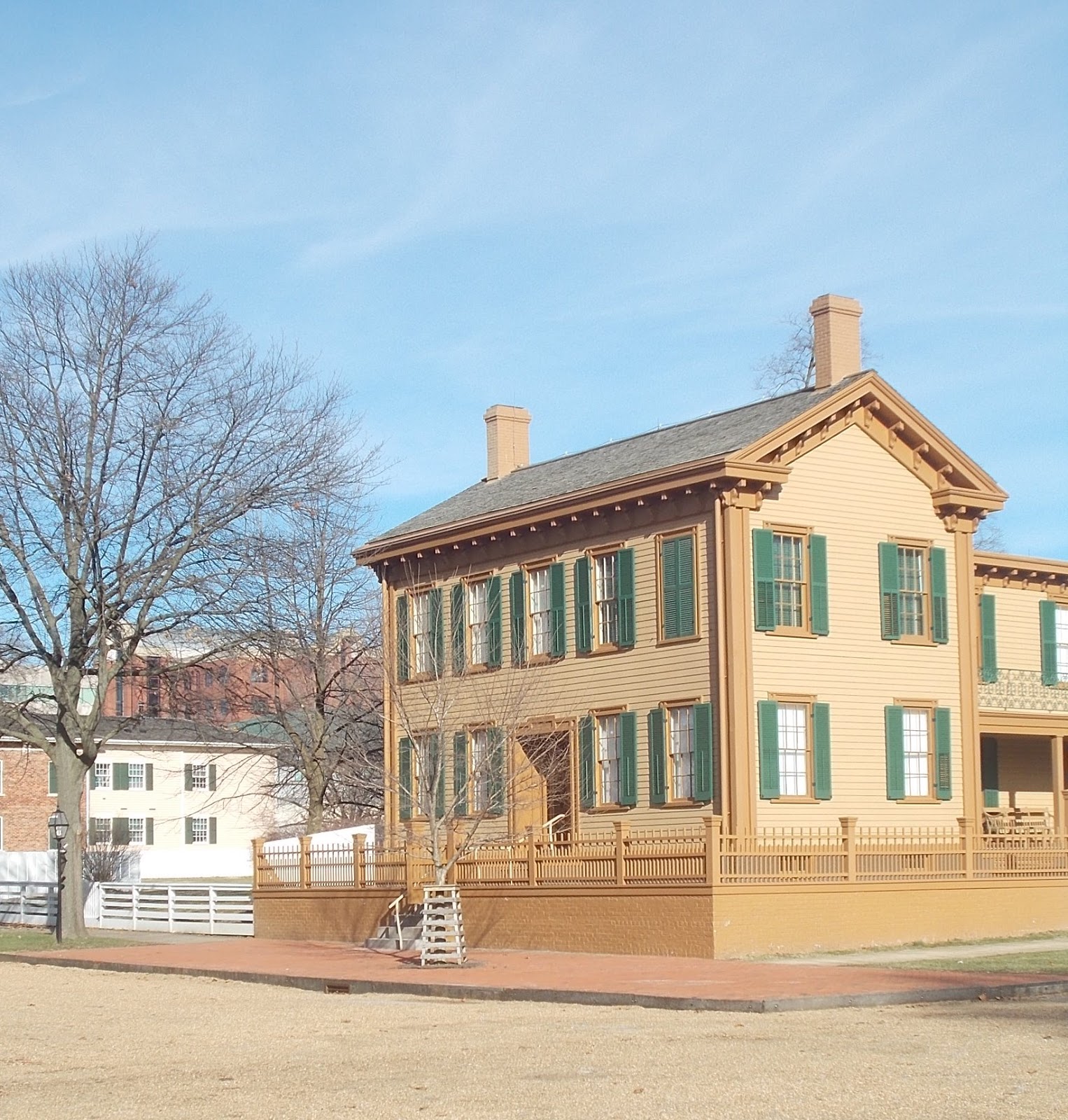
The Lincolns bought the house in Springfield shortly after Abe married Mary Todd. It was where all of their children were born and where one of them died. It was very much Lincoln's home. He planned to return there after he finished his term (or terms) as President. When he bought the house in the 1840's it was a modest one-and-a-half story house. As both his income and his family increased, he hired a contractor to expand it to the full two-story house that exists now.
| The small tree with the white cage is the one that is periodically replaced. |
One of the cool things about Lincoln Home is it's not just the house. The park includes property on four blocks. A number of houses that existed when Lincoln lived in Springfield have been restored to their 1850's exterior appearance. Some are used for exhibit space, some are utilized for park offices, and some are leased. When I visited the park for work in 2006 Senator Durbin had an office in one of the houses. From the sidewalk the building looked like all the other 1850's structures. Access and parking for staff was from the alley behind the building.
| The Dean House. It's used for exhibits. |
Subscribe to:
Posts (Atom)