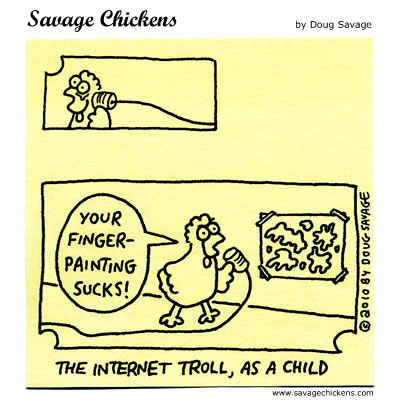
A few months ago I was invited to become a contributor to a blog that invites a variety of perspectives, political and otherwise. I had qualms, but decided to give it a shot. I still have qualms.
When I blog here in my little self-created corner of the universe, I'm doodling in a space with an established structure. It's comfortable. I can take off my metaphorical stays, relax, and cheerfully free associate. Over in the new space, however, it's still feeling like the lacing is being pulled tighter. There's too much of a sense of being constrained. I'm not sure why. Comments are civil, although it's pretty clear a number of regular commenters on that site have their responses set on auto pilot. They have their pet theories and, no surprise, manage to work those pet theories into every comment they leave regardless of the supposed topic of the original post. That's not really a problem, though, because just about the only comments I ever bother to read seriously are the ones when I see while doing comment moderation on this blog.
Maybe it's the quota system -- I'm supposed to do two posts a month in order to remain an active author. Okay, so two posts isn't very many, but I never was real keen on production quotas in general. Having worked at a number of shit jobs that had production quotas, I know from sad experience that if everyone always meets the quota, sooner or later the quota goes up. This month it's two posts. . . if everyone does their two posts, pretty soon the blog administrator will start demanding three. . . and so it goes. Pretty soon I'll be typing my fingers to the bone and for what? No reward other than the remote possibility half a dozen people will read my deathless prose. That isn't much of an incentive.
Or perhaps the truth is even simpler. I keep forgetting the bloody password for the other blog. It's got multiple layers of security (the administrator is a bit of a zealot when it comes to protecting the space) and times a person out after a certain number of minutes. I get a few sentences done, get timed out, have to log back in and, despite having instructed the computer to "remember me," end up having to rummage around on my rat's nest of a desk looking for the odd scrap of paper with the most recent iteration of the password on it. By the time I find it, my fragile train of thought has fallen off a trestle, and I find myself thinking about cranes lifting boxcars out of rivers instead of whatever it was I thought I was saying to begin with.
In short, it's really hard to develop much enthusiasm for contributing to a blog when the contributions feel way too much like work. If I'm not getting paid to do something, then that something should be fun. When it stops being fun, it's time to walk away.
Random thoughts about roadside art, National Parks, historic preservation, philosophy of technology, and whatever else happens to cross my mind.
Showing posts with label the writing life. Show all posts
Wednesday, November 12, 2014
Sunday, April 27, 2014
How to tell you've won the argument without even trying
Clue Number One:
The comments responding to the post are longer than the post itself. Any time
someone has to try to bolster his or her counter-argument by either over-explaining
or craploading, he or she has a weak case. Either that, or he or she has way
too much free time and needs to put down the Cheetos and Mountain Dew, turn off
the computer, and get out of the basement more often.
Clue Number Two:
Name calling. If a critic has to indulge in ad hominem attacks on the writer, whether it’s to refer to the writer as a rightwing nutjob or a bleeding
heart liberal, instead of addressing the substance of the post, that critic has
a problem. Regardless of whether or not the argument being made is sound, the
personal ideology of the writer is irrelevant. If you don’t agree with the
writer, point out the problems with the argument instead of being intellectually
lazy. Counter arguments lead to discussions and the possibility of finding
commonalities; name calling just builds walls.
Clue Number Three:
Comments pointing out the obvious while ignoring the actual content of the
post. “You used biased sources.” Well, duh. There’s no such thing as an
unbiased source, especially if a topic is at all controversial. What’s your
next stunning revelation going to be? Water is wet? Snow is cold?
Clue Number Four: Seizing
on a phrase or a sentence that has little or nothing to do with the actual
point of the post and attacking it like a starving weasel that’s just spotted a
particularly fat mouse. Either the commenter doesn’t have an effective counter
argument to propose, or he or she is lacking in reading comprehension. If the
writer begins by saying, for example, “I saw X recently and it reminded me of Y”
and then writes a post about Y but your comment is a lengthy crapload about X,
then you’re not paying attention. And you’re also way too sensitive about whatever
X might happen to be.
[h/t to Bad Tux for getting me thinking
about deconstructing craploaded comments. It’s never been a problem on this
blog, but it is in another place I write.]
Wednesday, August 7, 2013
Games authors play
I've been reading a book set one county over from us here in the U.P. Cache of Corpses is apparently the third book in a series written by Henry Kisor that feature a deputy with the "Porcupine County" sheriff's department. Why Kisor felt the need to change location names is a mystery, but he does. Like many other authors, he indulges in minor name changes that seem to serve no useful purpose. I know there's a long tradition of creating fictional locations in literature -- Faulkner's Yoknapatawpha County springs to mind -- but if you're going to tell the readers that your mythical county is abutted by Lake Superior, Houghton County, and Gogebic County, why not just keep right on using Ontonagon County instead of changing it to the utterly ludicrous Porcupine County? Anyone who knows the western U.P. is going to know it's Ontonagon County as soon as they read Kisor's description of the old county poor farm (an impressive ruin standing spitting distance from M-38; see photo above), and anyone who doesn't know isn't going to care. Was he worried that if he referred to Ontonagon as Ontonagon the people who run Syl's Cafe would sue over his description of the edible but not particularly good food at the loosely disguised "Merle's"?
I don't get it. I can understand authors who live in a community playing games with place names and trying to establish a fair amount of daylight between their work and whatever inspired it, but when the author is a FIP* who falls into the summer people/occasional tourist category? Why not just call places by their proper names instead of making up ludicrous crap like "Coppermass"? It makes no sense for the author to call places like Matchwood, Topaz, and Bruce Crossing by their actual names and then make up something for White Pine and Silver City, especially when the fictional names are just a notch off the real ones (Lone Pine and Silverton, respectively).
Alternatively, if you're going to make up names, come up with ones that mesh with the way the other counties in Upper Michigan got named: pick something Ojibwe (e.g., Gogebic, Ontonagon) someone notable (Schoolcraft, Baraga, Houghton), or something mineral (Iron). But Porcupine? Give me a break. That's just laughable.
As for the overall quality of the book, although I'm not quite done with it, I think it's safe to say its merits fall right in line with the food at Merle's: mediocre but tolerable. There's a fair amount of condescension laced through his descriptions of the locals, he gets a lot of the local color wrong -- how he can describe a typical U.P. wedding reception and not include a mention of the old ladies doing the chicken dance is beyond me -- and the flannel shirts we Yoopers wear are Union Bay, not Pendleton (seeing Yoopers described as wearing Pendleton was definitely a WTF moment). I also found its basic premise to be highly implausible, but I've read worse. Would I recommend to other mystery buffs? Probably not. If this had been a book I'd made the mistake of purchasing instead of checking out from the library, I'd toss it into the St. Vincent de Paul box rather than pass it on to either of my daughters.
As for why the Poor Farm photo, it's the setting for the first chapter of the book.
[*FIP = fucking Illinois prick. One of the many things Kisor gets wrong. He calls them FIBs. As long as I can remember, those asshats with the Illinois plates have been FIPs in northern Wisconsin and the western U.P.]
I don't get it. I can understand authors who live in a community playing games with place names and trying to establish a fair amount of daylight between their work and whatever inspired it, but when the author is a FIP* who falls into the summer people/occasional tourist category? Why not just call places by their proper names instead of making up ludicrous crap like "Coppermass"? It makes no sense for the author to call places like Matchwood, Topaz, and Bruce Crossing by their actual names and then make up something for White Pine and Silver City, especially when the fictional names are just a notch off the real ones (Lone Pine and Silverton, respectively).
Alternatively, if you're going to make up names, come up with ones that mesh with the way the other counties in Upper Michigan got named: pick something Ojibwe (e.g., Gogebic, Ontonagon) someone notable (Schoolcraft, Baraga, Houghton), or something mineral (Iron). But Porcupine? Give me a break. That's just laughable.
As for the overall quality of the book, although I'm not quite done with it, I think it's safe to say its merits fall right in line with the food at Merle's: mediocre but tolerable. There's a fair amount of condescension laced through his descriptions of the locals, he gets a lot of the local color wrong -- how he can describe a typical U.P. wedding reception and not include a mention of the old ladies doing the chicken dance is beyond me -- and the flannel shirts we Yoopers wear are Union Bay, not Pendleton (seeing Yoopers described as wearing Pendleton was definitely a WTF moment). I also found its basic premise to be highly implausible, but I've read worse. Would I recommend to other mystery buffs? Probably not. If this had been a book I'd made the mistake of purchasing instead of checking out from the library, I'd toss it into the St. Vincent de Paul box rather than pass it on to either of my daughters.
As for why the Poor Farm photo, it's the setting for the first chapter of the book.
[*FIP = fucking Illinois prick. One of the many things Kisor gets wrong. He calls them FIBs. As long as I can remember, those asshats with the Illinois plates have been FIPs in northern Wisconsin and the western U.P.]
Thursday, December 15, 2011
The Writing Life and Reality Checks
The S.O. and I drove up to Calumet yesterday for an author's talk and book signing sponsored by the Friends of the Calumet Public Library. The S.O.'s cousin, Mel Laurila, had mentioned in June that his first novel, Mine Games, had been accepted for publication. At that time, he thought it would be rolling off the presses by late summer. Nope. Actual publication (as in hard copies ready for sale to the reading public) happened about a week ago.
Mel's talk was interesting, and not just for the specific insights into the book. It's a murder mystery set in Michigan's Copper Country that uses the possible reopening of a historic copper mine as a motivation for murder. Mel knows the area and the subject matter quite well, having graduated from Michigan Tech and spent the past 30 or so years working in the mining industry. The plot revolves around what happens when the mine changes ownership and someone dies. I look forward to reading it and seeing how I do with his challenge to see how early in the book I can figure out who's responsible for what.
His talk also served as a major reality check for any aspiring novelists in the audience. It really made it clear just how much work is involved in getting published, both before and after acceptance by a publisher. You hear stories about rejection -- Stephenie Meyer, for example, likes to tell interviewers that her first novel was rejected something like14 times before being picked up by a publisher. Well, it appears 14 rejection letters are nothing, a mere blip, they barely qualify as painful. Mel did 153 submissions to potential agents and publishers before hitting pay dirt. One hundred fifty-three. Now, that's persistence.
After publication, of course, you have to leap on to the promotion bandwagon -- hustle for book signings, arrange for talk show appearances, agree to anything and everything you can do to get the public to notice Your Book. If that hustling includes doing things like keeping cases of books in your car, seeking out every independent bookstore you can find on your own and persuading the managers to sell your book, you do it. -- because if some magic minimum number of sold copies isn't achieved, your first novel published could very well be your last.
Bottom line: if you believe in your work, you never give up.
Mel's talk was interesting, and not just for the specific insights into the book. It's a murder mystery set in Michigan's Copper Country that uses the possible reopening of a historic copper mine as a motivation for murder. Mel knows the area and the subject matter quite well, having graduated from Michigan Tech and spent the past 30 or so years working in the mining industry. The plot revolves around what happens when the mine changes ownership and someone dies. I look forward to reading it and seeing how I do with his challenge to see how early in the book I can figure out who's responsible for what.
His talk also served as a major reality check for any aspiring novelists in the audience. It really made it clear just how much work is involved in getting published, both before and after acceptance by a publisher. You hear stories about rejection -- Stephenie Meyer, for example, likes to tell interviewers that her first novel was rejected something like14 times before being picked up by a publisher. Well, it appears 14 rejection letters are nothing, a mere blip, they barely qualify as painful. Mel did 153 submissions to potential agents and publishers before hitting pay dirt. One hundred fifty-three. Now, that's persistence.
After publication, of course, you have to leap on to the promotion bandwagon -- hustle for book signings, arrange for talk show appearances, agree to anything and everything you can do to get the public to notice Your Book. If that hustling includes doing things like keeping cases of books in your car, seeking out every independent bookstore you can find on your own and persuading the managers to sell your book, you do it. -- because if some magic minimum number of sold copies isn't achieved, your first novel published could very well be your last.
Bottom line: if you believe in your work, you never give up.
Sunday, September 19, 2010
Every writer needs a good editor
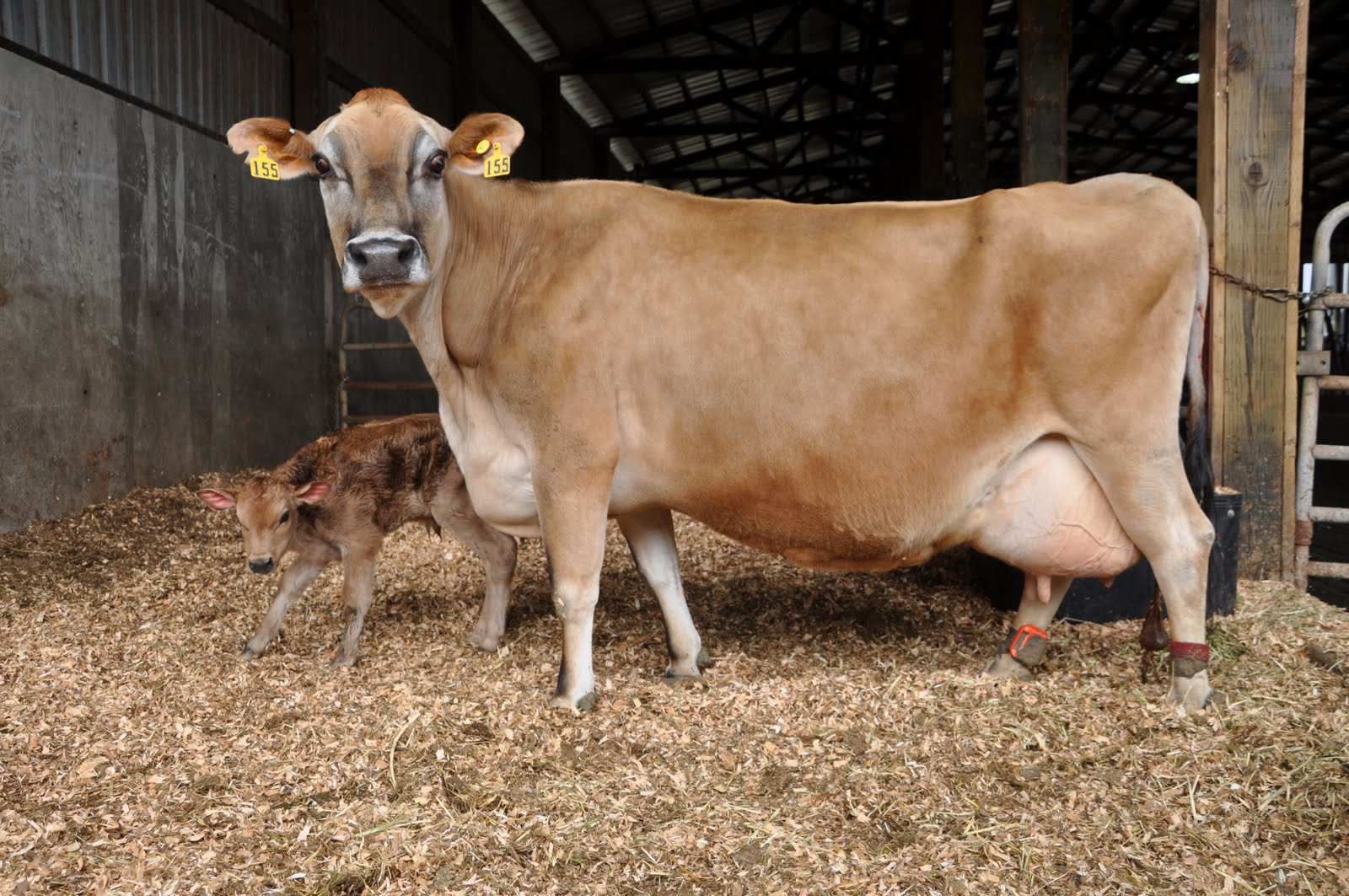
I got about three pages into the novel I'm currently reading (Moon Pies and Movie Stars by Amy Wallen) before I hit a major blooper: black and white Jersey cows.
Granted, the book is fiction, but that doesn't excuse getting your context wrong. So if you're going to name a breed, for Calliope's sake, don't screw it up by making it the wrong color! If you don't know something, don't try to fake it. Just leave it out. Every time an author gets something wrong -- verbal anachronisms (using the wrong slang for a time period), general geography, clothing styles or details (putting zippers on an Old Order Amish girl's dress, for example) -- odds are some reader is going to trip over that blooper. It's going to distract from the narrative, and the writer is at risk of losing a reader permanently.
Of course, if Wallen had a decent editor -- and despite the fact she thanks her editor in the acknowledgements section, she obviously didn't -- that editor would have paused at the word Jersey and said "what color are those cows?" (See photo for answer.) Just like she would have paused at the description of the El Camino vehicle to wonder just exactly what is an El Camino (Chevy hasn't made them since 1987), and whether or not the details are right on the pin-setting equipment in the bowling alley. There's a reason writers get told "Write what you know!" If a piece of fiction isn't grounded in reality, if an author is trying to fake a setting without having done a ton of research first when they're trying to set a story someplace they've never been or describing jobs they've never done, it's going to show really fast.
Because I work as an editor, every so often a friend or acquaintance will ask me to look at a draft of something they've done. I always refuse. My stock answer is I work in such a hard-science area that I'm not qualified to edit fiction. That's an evasion. I may not edit fiction now, but that doesn't mean I can't tell the difference between good and bad writing. The real problem is that I'm a really poor liar, and way too often the draft that's being waved under my nose gives up a distinct cheesy odor. I don't want the appalled look on my face when I hand the manuscript back to kill any friendships. It's the job of friends to murmur encouraging words and nurture hope; it is the job of editors to kill dreams. Your friends will tell you "This is the most romantic story I've ever read!" Your editor will look at the manuscript, mutter foul words, ask if your goal as a writer is to crank out hack work for Harlequin, and then toss your shattered hopes back at you with a demand for yet another rewrite.
Granted, the book is fiction, but that doesn't excuse getting your context wrong. So if you're going to name a breed, for Calliope's sake, don't screw it up by making it the wrong color! If you don't know something, don't try to fake it. Just leave it out. Every time an author gets something wrong -- verbal anachronisms (using the wrong slang for a time period), general geography, clothing styles or details (putting zippers on an Old Order Amish girl's dress, for example) -- odds are some reader is going to trip over that blooper. It's going to distract from the narrative, and the writer is at risk of losing a reader permanently.
Of course, if Wallen had a decent editor -- and despite the fact she thanks her editor in the acknowledgements section, she obviously didn't -- that editor would have paused at the word Jersey and said "what color are those cows?" (See photo for answer.) Just like she would have paused at the description of the El Camino vehicle to wonder just exactly what is an El Camino (Chevy hasn't made them since 1987), and whether or not the details are right on the pin-setting equipment in the bowling alley. There's a reason writers get told "Write what you know!" If a piece of fiction isn't grounded in reality, if an author is trying to fake a setting without having done a ton of research first when they're trying to set a story someplace they've never been or describing jobs they've never done, it's going to show really fast.
Because I work as an editor, every so often a friend or acquaintance will ask me to look at a draft of something they've done. I always refuse. My stock answer is I work in such a hard-science area that I'm not qualified to edit fiction. That's an evasion. I may not edit fiction now, but that doesn't mean I can't tell the difference between good and bad writing. The real problem is that I'm a really poor liar, and way too often the draft that's being waved under my nose gives up a distinct cheesy odor. I don't want the appalled look on my face when I hand the manuscript back to kill any friendships. It's the job of friends to murmur encouraging words and nurture hope; it is the job of editors to kill dreams. Your friends will tell you "This is the most romantic story I've ever read!" Your editor will look at the manuscript, mutter foul words, ask if your goal as a writer is to crank out hack work for Harlequin, and then toss your shattered hopes back at you with a demand for yet another rewrite.
Monday, May 10, 2010
What an editor does
Before:
The Late Sir J. P. Getty bequeathed the sum of £9,708,692.70 to you in the codicil and last testament to his (WILL) which is eleven (11%) of his total funds of 88,260,443.00 deposited with one of UK's biggest financial institution. I look forward to hearing from you soon.
After:
The late Sir J. P. Getty bequeathed the sum of £9,708,692.70 to you in a codicil to his last will and testament. This sum represents eleven (11) percent of his total funds of £88,260,443.00 and is deposited with one of the United Kingdom's largest financial institutions. I look forward to hearing from you soon.
I'd also suggest to the author that she change "largest financial institution" to a specific name to add veracity, but as a rule when I edit I try to keep things as close as possible to the original word choices -- it's supposed to be the author's voice, not mine, and I don't want to walk all over it.
Tuesday, May 4, 2010
Good writing
I've been reading one of Paul Theroux's travel books, Ghost Train to the Eastern StarOne thing that struck me while reading Ghost Train was Theroux's ability to focus on his writing wherever he happens to be and whatever might be going on around him. The train may be crowded, smelly, and uncomfortable but he keeps right on quietly taking notes the old-fashioned way (with a paper notebook and pencil) that will eventually become the book, while at the same time (or at least as part of the same trip) he's also working on short stories and novels. He provides one of the most vivid examples of one of the best pieces of advice I was ever given about writing: always have more than one project in progress. It doesn't matter if a person works in fiction or nonfiction, you should never put all the cliched eggs in one hackneyed basket.
I'm also having my usual reaction to a Theroux travel book: fighting the urge to book a train trip somewhere -- anywhere! -- ASAP. It's a bit odd. Even when Theroux is describing the lavatories as "unspeakable" and the conductors as surly, I find myself wanting to go rattling through Uzbekistan on a train that's seen better days, too.
Tuesday, November 10, 2009
Epistlatory novels
It also means, of course, that it's easy to pad out the page count -- lots of white space in the breaks between the letters (see novel mentioned above for a great example of that tactic) -- or to blame choppiness or uneven quality on deliberate authorial choices rather than weak writing skills. Additionally, it can be a little off-putting to read, as I have in some novels, letters that contain information that no one in his or her right mind would have included in a letter sent during the historical era when the novel is set. Chelsea Quinn Yarbro seized upon the letter-writing device a number of years ago for her St. Germain vampire series, and, let's face it, it calls for a tremendous amount of willing disbelief on the part of the reader to ignore the obvious insanity of characters discussing the downsides of being undead in letters being carried by messengers in Catholic Europe in the Middle Ages, especially when those letters are supposedly written in Latin, and the characters writing them are described as already paranoid about being spied on and/or suspected of heresy. (Fortunately for readers addicted to St. Germain since the publication of Hotel Transylvania in 1978, Yarbro salts the letters throughout the novels like the calendar pages one would see in old movies to indicate the passage of time rather than relying on them alone to carry the work.)
One of the advantages of the epistlatory technique is that it supposedly eliminates the omniscient narrator from the story. I'm not sure that's true. After all, someone is picking and choosing which letters, newspaper reports, journal entries, and other material to include to tell the story -- the narrator is always going to be present in some form. The big question actually isn't the technique -- it's does the narrator, i.e., the book, have a story worth telling? Some epistlatory novels do, some don't.
[*Brief review: 100% mind candy; despite its 1946-coming-to-grips-with-the-aftermath-of-WWII setting, the book is basically a piece of lightweight fluff ideal for reading on an airplane or while sitting in a doctor's waiting room. It could have been published by Harlequin.]
Addendum -- total digression: I am now giving serious thought to changing my profile picture. The Victorian lass above looks a lot better than the demented woman with a pen I have been using.
Thursday, September 24, 2009
Serious journalism
Long, long ago in a galaxy far away I was part of the staff of a small town daily newspaper. There are days when I miss some aspects of that job, like writing headlines, especially when I see news items like this:
Environmentalists Seek to Wipe Out Plush Toilet Paper
Soft Toilet Paper's Hard on the Earth, But Will We Sit for the Alternative?
Environmentalists Seek to Wipe Out Plush Toilet Paper
Soft Toilet Paper's Hard on the Earth, But Will We Sit for the Alternative?
Saturday, September 12, 2009
More proof the U.P. is different
Having been born and raised in Michigan's Upper Peninsula, I've gotten used to people asking "is that part of Canada?" However, I did not expect fellow historians and scholars to assume it actually had successfully seceded from the downer peninsula. I was wrong.
Earlier this week the American Society for Environmental History notified me a paper I proposed for presentation at the 2010 annual meeting has been accepted. The topic of the paper? A civil engineer's response to an 1893 typhoid epidemic in Ironwood, Michigan. The theme of the panel I've been placed in? International perspectives on water pollution and health. The other three papers focus on events during the colonial period in third world nations.
Then again, considering what conditions were like in Ironwood in the 1890s, maybe it's an accurate placement.
Wednesday, November 19, 2008
Wednesday, October 29, 2008
Shameless self promotion
My oeuvre grows. Granted, I'm only the fourth author on a co-authored piece, but found out recently an article "we" submitted to the Archives of Pediatric and Adolescent Medicine was accepted. On one level I'm thinking, no big deal, all we did was state the obvious (poor kids tend to lag behind richer kids in getting vaccinations); on another I'm doing the Happy Dance. I've achieved true nerdhood -- the article is a statistical analysis of vaccination patterns. I'll be indexed in PubMed! When people Google me they may find something other than the fact I donated $25 to Dennis Kucinich in 2004! Life is good.
Sunday, October 19, 2008
Mental doodlings
As usual, I'm awake way too early for a Sunday morning. Can't even get into feeding the C-SPAN addiction yet because "Washington Journal" won't start for another hour. I should be working on a contract writing job that has gone past deadline -- a 1000 word essay on Finnish hockey player, 1992 Olympian, and Anaheim Duck Teemu Selanne that's destined for publication in a junior high level reference work, a who's who of athletes -- but am having trouble getting warmed up to the task. Selanne's an amazing athlete, just got re-signed to a two year contract despite being 38 years old and burdened with the typical aging athlete problems (bad joints, various healed fractures, a definitely gap-toothed smile, a nose that's obviously been broken multiple times), but, much as I love hockey, it's going to take a little more caffeine to get me to where I can make the mental shift from current events to sports, type the phrase "right wing," and then go on to say good things.I think one of the problems with the mild writer's block is I get to do so little real writing now, despite having a job title that puts writer first and editor second, that I'm forgetting how to. It's been steadily downhill since I went to the work for the government. The job at Apostle Islands NL required writing -- I cranked out Determinations of Eligibility like some sort of assembly line -- but the job in the regional office not so much. The job description for the position there included the phrase "research and write national register nominations," but it turned out the actual work was 90% cut and paste into a database and maybe only 10% original research and writing. I could feel my writing skills atrophy with every passing day, which is probably one reason I fell for Large Nameless Agency's offer here in Atlanta.
Once again, of course, the position description on the job announcement lied. I should have known. The job they tell you on the phone you're going to be doing is never the job they actually expect you do once you're committed to the cubicle. I went from 90% database and 10% creative/challenging to 90% proofreading and 10% creative/challenging. The ratio didn't change; just the content of the "wow, am I ever over-educated [and overpaid] for this!" part. Back in Omaha a lot of what I did could have been done equally well by anyone with a 9th grade education and half an hour's orientation to the computer; here in Atlanta most of what I do could be done equally well by any literate person who made it through a high school English (composition, not literature) class. (One of these days I'll have to do a rant about creeping credentialism and/or the way the young people of America are being pushed into acquiring student loan debt to work at jobs that really do not require more than basic literacy.)
Today, however, will be devoted to Teemu. I'll crank out the 1000 words, thrill my editor, and eventually acquire a miniscule fee and another set of pre-prints to take up space on the shelf with the rest of my (literally) encyclopedic oeuvre, which includes gems like "Tethered Satellite Systems" and "Grace Hopper Invents COBOL." When I told Utah Savage I was incapable of writing fiction, I wasn't kidding. But if you ever need bacteriophages explained to 8th graders, I'm your gal.
Subscribe to:
Posts (Atom)