
Friday, September 24, 2010


Monday, September 20, 2010

Sunday, September 19, 2010
The incredible shrinking junk food

Interesting marketing technique - turn the wrapper into a memo pad and hope consumers won't notice that what's inside that New wrapper has shrunk while at the same time the price being charged for the box has gone up.
Every writer needs a good editor
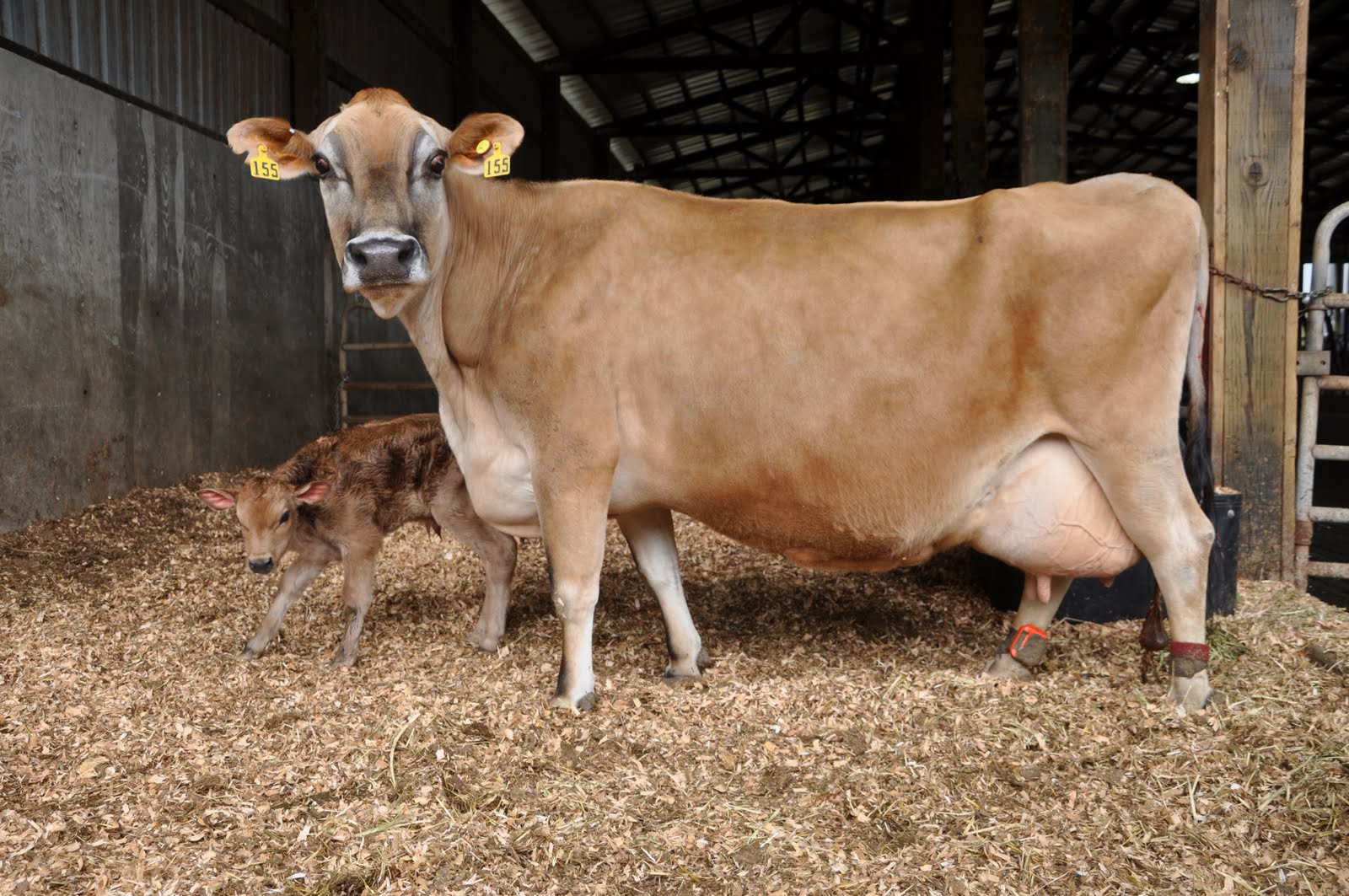
Granted, the book is fiction, but that doesn't excuse getting your context wrong. So if you're going to name a breed, for Calliope's sake, don't screw it up by making it the wrong color! If you don't know something, don't try to fake it. Just leave it out. Every time an author gets something wrong -- verbal anachronisms (using the wrong slang for a time period), general geography, clothing styles or details (putting zippers on an Old Order Amish girl's dress, for example) -- odds are some reader is going to trip over that blooper. It's going to distract from the narrative, and the writer is at risk of losing a reader permanently.
Of course, if Wallen had a decent editor -- and despite the fact she thanks her editor in the acknowledgements section, she obviously didn't -- that editor would have paused at the word Jersey and said "what color are those cows?" (See photo for answer.) Just like she would have paused at the description of the El Camino vehicle to wonder just exactly what is an El Camino (Chevy hasn't made them since 1987), and whether or not the details are right on the pin-setting equipment in the bowling alley. There's a reason writers get told "Write what you know!" If a piece of fiction isn't grounded in reality, if an author is trying to fake a setting without having done a ton of research first when they're trying to set a story someplace they've never been or describing jobs they've never done, it's going to show really fast.
Because I work as an editor, every so often a friend or acquaintance will ask me to look at a draft of something they've done. I always refuse. My stock answer is I work in such a hard-science area that I'm not qualified to edit fiction. That's an evasion. I may not edit fiction now, but that doesn't mean I can't tell the difference between good and bad writing. The real problem is that I'm a really poor liar, and way too often the draft that's being waved under my nose gives up a distinct cheesy odor. I don't want the appalled look on my face when I hand the manuscript back to kill any friendships. It's the job of friends to murmur encouraging words and nurture hope; it is the job of editors to kill dreams. Your friends will tell you "This is the most romantic story I've ever read!" Your editor will look at the manuscript, mutter foul words, ask if your goal as a writer is to crank out hack work for Harlequin, and then toss your shattered hopes back at you with a demand for yet another rewrite.
Saturday, September 18, 2010
Politics and prognostication

First, some numbers, courtesy of the Rude Pundit:
For anyone who wonders if O'Donnell can pull out an upset, let's put her numbers in context:As far as I can tell, O'Donnell is not the complete idiot that some folks on the left would like to believe -- she's managed to support herself by telling a small group of people what they'd like to hear for quite a few years now (also known as the Alan Keyes model of being a perpetual candidate for something and then paying yourself a salary out of your campaign funds) -- but she's also not likely to attract many voters outside that small group. Yes, she may be appealing to her core followers, but that's about it. Then when you add in the fact that all the stuff that makes her newsworthy -- masturbation is bad -- is the same stuff that makes people check her for the tinfoil hat, she looks even less likely to attract many mainstream voters.
Number of registered voters in Delaware: 621,746
Number of registered Republicans: 182,796 (29%)
Number of votes O'Donnell received: 30,561
By the Rude Pundit's awesome abilities with a calculator, that means she received: 16.7% of registered Republicans (or 4.9% of total registered voters).
Number of registered Democrats: 292,738 (47% of registered voters)
One of the obvious failings of trying to predict anything from primary results is that primaries attract the most impassioned, the most ideologically pure, and the least sane voters. Really tiny numbers of voters make decisions that the rest of us then get to regret -- and to vote against in the general election. If Congressman Mike Castle had won the Republican senatorial primary, quite a few Democrats in Maryland wouldn't have cared much. They might even have voted for him. They'd known Castle for years, and recognized he's basically a pretty moderate and pragmatic guy. O'Donnell, on the other hand, . . .
My own prediction for November? I don't have one, but I do think all the hype about a Republican rout and a retaking of both the Senate and the House is more a product of Republican wishful thinking than being reality-based. The right cranks up its sound machine, and the media play right along and provide an echo chamber. In general I think any incumbent who survived his or her party's primary this summer is going to be safe in the fall. There's always a lot of talk about throwing the bums out, but the reality is that once it comes down to the general election, people lean more toward to keeping the evil they know than with voting for someone new. Then, when you add in the gerrymandering that has turned most Congressional districts into safely Republican or safely Democratic enclaves, the odds of the numbers changing much becomes even slimmer.
Not that it matters much. All it will take is for the Republicans gaining even one seat, and the punditry, the chattering classes, will be touting their own predictive abilities, and telling us all the Obama presidency is doomed. The stupid, it burns.
Sunday, September 12, 2010
Summer's over

Enclosed with the bill was an announcement of a new state holiday: Shake Your Mailbox Day is October 23. Michigan residents are encouraged to go out to the side of the road and give their mailboxes a good shake to see if they're sturdy enough to survive being buried in snowbanks. "If you can shake your mailbox, it probably needs maintenance."
Saturday, September 11, 2010
Amazing reading experience
A murder mystery in which the heroine does not wander through the story totally clueless (or close to it), and then end up stumbling across the answer while simultaneously acquiring serious physical injuries and waiting to be rescued by some man: Bone Hunter by Sarah Andrews.
The book has a number of flaws, but the fact it has an actual thinking, autonomous heroine is sufficiently amazing that I'll overlook them. Geologist Emily Hansen actually manages to string clues together, comes up with answers before the police do, and then -- this is the absolutely most amazing part -- rescues the LEO who has been assigned to protect her. Em comes close to dying because of course there have to be close calls: a helicopter crash, getting shot at and pursued by the bad guys, getting swept downstream by a river that's running stronger than anticipated. Nonetheless, she's the one who takes the lead when she and the police officer find themselves apparently trapped by the bad guys and figures out where they are in the Utah canyonlands in terms of being able to find their way to help. She also survives the experience with nothing worse than scrapes and bruises, another amazing outcome in a genre that seems locked into having the heroine end up in a cast or a hospital bed on a routine basis.
The book also had one of the niftiest murder weapons I've seen in a long time.
The flaws? Some of it was plotting -- for example, one or two minor characters wander in just long enough to pique a reader's interest but then never do play any sort of role other than stage dressing -- and some of it was just awkward writing in a few places. Minor quibbles for a genre where the dreck generally vastly outnumbers the good stuff.
Thinking about work

In any case, I'm wondering if the colleague who was out sick all week will be back in the office on Monday. The Atlanta air apparently tried to kill her -- an asthma attack over the Labor Day weekend resulted in a trip to the ER, and that in turn led to hospitalization while the doctors try to stop the wheezing. That in itself would not particularly noteworthy -- deserving of some twinges of sympathy maybe, but people end up getting sick or injured all the time. You wish them a speedy recovery, but that's usually about it.
No, this time it affected me -- not surprisingly, when someone's in the hospital indefinitely, co-workers are going to have to step in to cover for that person. However, we were at a point in our production schedule where the bulk of the editing for the November articles should be done. Our desktop publishing guy starts layout in InDesign any day now, so at this point every article should be close to the final step in the process. We split what was in our colleague's queue so we could take care of what we all thought would be the final bits to get the articles into production.
Except it was not the final bits. Of the 7 or so articles assigned to this copyeditor, none, zero, zip, nada had even gone to the author as page proofs (we send page proofs to the authors for corrections and last minute revisions; we send galleys after layout for a final proofreading before it goes to the printer so they've got two shots at fixing stuff we screw up). So we kind of do a collective, WTF?! -- a week until deadline and nothing's gone to an author yet? -- sigh, and move on -- and then we start discovering our colleague hadn't placed the graphics into the production review folder. The manuscripts had references to figures in text, but there were no figures filed where they should have been. That's when the collective pissing and moaning turned intense.
We actually have a clearly defined procedure to handling the graphics that accompany an accepted paper: as soon as we get the downloaded manuscript, we're supposed to move any and all figures into a folder on the share drive so our graphics expert can check them ASAP. That way if authors submit figures where the resolution is too low, the dimensions are too small, or there are other problems we can kick the figures back to the authors for repair work fast. More collective pissing and moaning, with probably the lowest volume coming from the graphics expert -- she was actually seeing things a few days early instead of having to go hunting for them at the last minute.
Bottom line -- I got stuck trying to do a fast edit on several papers that very clearly had not seen the hand of an editor at all yet, despite the colleague reassuring me on the phone that they were all "just about ready to go for a second edit." Just for the sheer hell of it, I did a line by line comparison of the one that had been in the colleague's share drive folder and the original as submitted, and the only apparent change was the one on the share drive had been run through the software we use for styles -- where I come from, formatting doesn't count as editing.
And, as I've been doing this clean-up work, I once again found myself thinking I'm so happy I'm not a supervisor -- because if there was ever someone who deserved to have a paper trail built, a less than successful performance review declared, a P.I.P. implemented, and (eventually) a nudge out the door for sheer incompetence delivered, it's probably this colleague, a woman who is extremely likable on a purely social level but is obviously working at a job that she is totally unsuited for.
The real kicker, of course, is that when I chatted with her on the phone yesterday she was annoyed as hell that our team lead had actually assigned those articles to other editors -- because even though she has no clue when she's getting out of the hospital, and even though she was no where close to having any of them done, she's totally convinced she would have wrapped them all up in time to get everything into production by Wednesday.
It's an absolutely classic example of most people being incapable of assessing their own strengths and weaknesses with any degree of accuracy. The least competent workers are always completely convinced they're doing a stellar job, and my colleague is no exception.
It's also a good example of finding out stuff I really wish I didn't know. It's always so much easier to commiserate with co-workers when you can halfway believe their bitching.
Best line in a political ad I've heard this election season
Nathan Deal . . . too corrupt even for Congress.
Mr. Deal, a Republican, resigned from Congress about mid-way through the term in an attempt to cut off an ethics investigation into his creative use of campaign funds while using the excuse that he wanted to focus on his campaign for governor here in Georgia. (He was partially successful; the Ethics Committee dropped the investigation, but then a federal grand jury started digging.) He does have a good shot at winning the general election here -- his campaign ads spend a lot of time ranting about the evils of illegal immigration and you can't go wrong in Georgia by hating on the Mexicans -- but you never know. Roy Barnes has jumped on the immigrant-bashing wagon, too, so mojados may turn out to be a nonissue. The ads bashing Deal keep hammering away at the idea that Deal may be too busy meeting with lawyers and avoiding prison to focus on governing Georgia. The attack ads against Barnes describe him as being even more arrogant and socialist than Obama. Regardless of affiliation, they all have really creepy narration -- the voice-over is so unpleasant that I don't know why either candidate would think the ads will inspire listeners to do anything other than hit the Mute button fast.
Deal's support is strongest out in the hinterlands, Barnes is strong in the cities. It's the typical Republican-Democrat split. Barnes was governor once before, so how well he does may depend on whether or not voters, regardless of party registration, remember his administration as having done a decent job. Not having been a resident of Georgia back then, I have no clue if he was better than Sonny Perdue -- I just figure there's no way he could have been worse.
Subscribe to:
Posts (Atom)